
Adventurous Kate contains affiliate links. If you make a purchase through these links, I will earn a commission at no extra cost to you. Thanks!
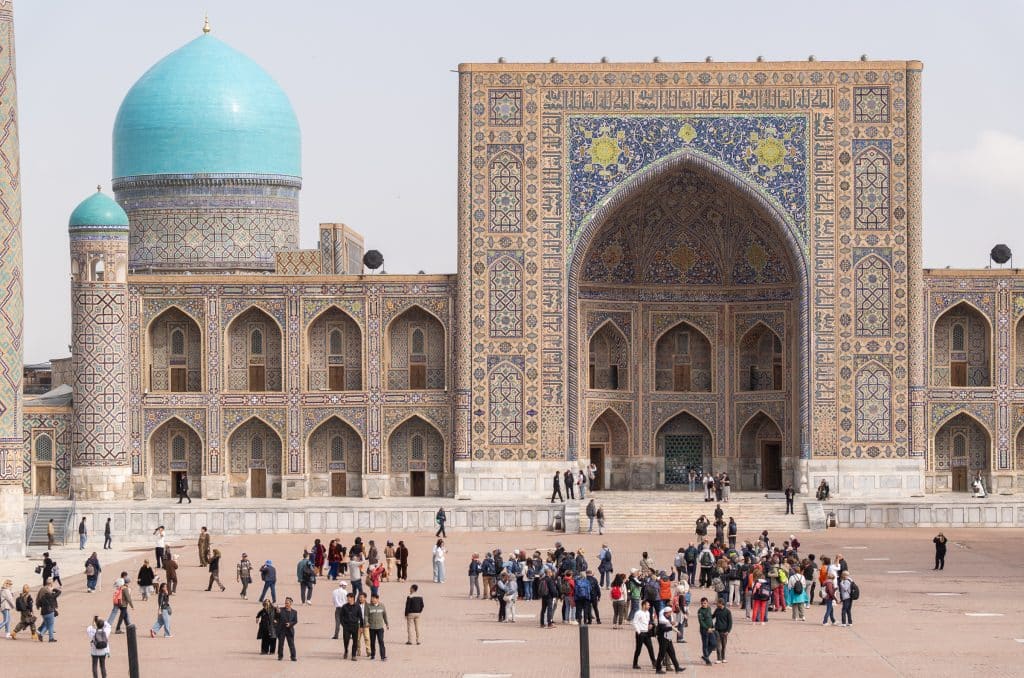
Uzbekistan is a fascinating country, filled with Silk Road history, stunning turquoise mosaics, and some of the best souvenir shopping I’ve ever experienced.
I enjoyed my solo trip to Uzbekistan, which I paired with time in Kazakhstan and Tajikistan. This was my first trip to Central Asia, and it couldn’t have gone any better!
My trip across Uzbekistan took me to four of the most popular cities — Tashkent, Samarkand, Bukhara, and Khiva. I learned Persian miniature painting and suzani embroidery. I gawked at the metro stations in Tashkent and even took a day trip into Tajikistan.
And along the way, I fell in love with this incredible country. And so did many of you, my dear readers. I have never seen such a strong reader response to a trip I’ve taken before! I know many of you will be planning your own trips to Uzbekistan soon.
I love writing my What NOT to Do posts, teaching travelers what they should NOT do in different destinations. Because sometimes you need to know what not to do before you figure out what to do!
I hope this post helps you plan your own dream trip to Uzbekistan. Let’s take a look!
This post was published in May 2026.
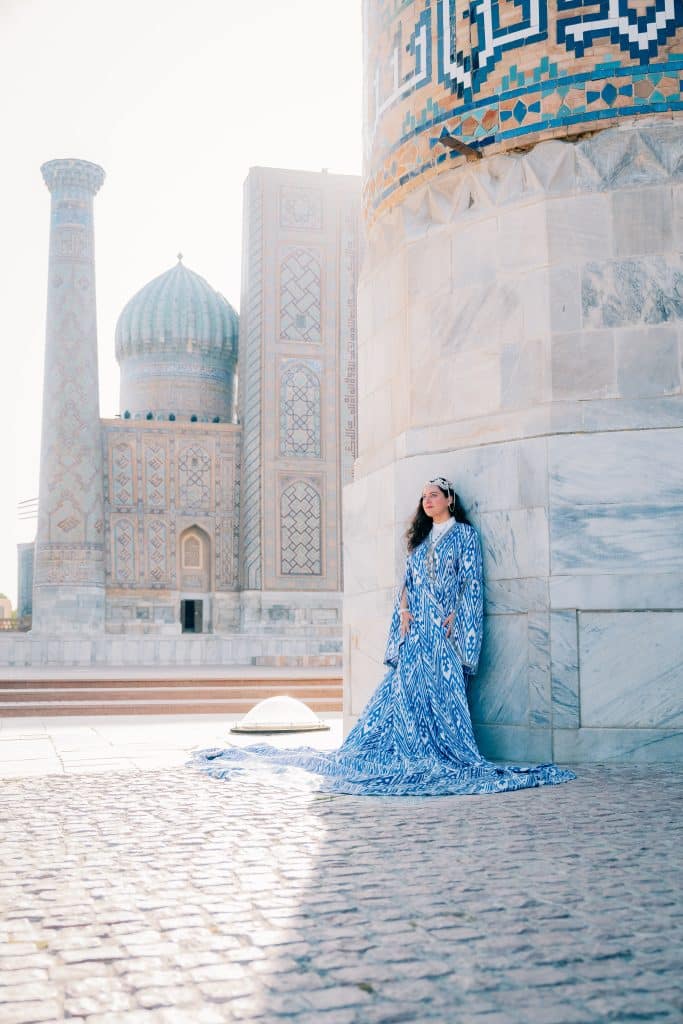
Let’s be honest — not a lot of people visit Uzbekistan before they’ve visited, say, Italy or Thailand or Mexico. It tends to be the thirtieth country people have visited, rather than the third, unless they are from Central Asia themselves.
Because of that — along with the erroneous belief that anywhere with “Stan” in its name is inherently dangerous — many people assume that Uzbekistan is best suited for expert travelers.
Here’s the truth: I was stunned at how easy Uzbekistan was to travel. And I’m not just saying that because I’m a very experienced traveler.
To start, Uzbekistan is a very safe destination where there is little violent crime and almost no street harassment. Additionally, Uzbekistan is a popular destination and has quite good infrastructure at a variety of price points.
On top of that, prices are affordable here. I spent on average $50 per night for a hotel, $2-3 for a Yandex taxi ride, and $6-8 for dinner. That makes it easier to justify staying in a nicer place or booking a higher class on a train.
The most important things for traveling Uzbekistan are researching the cities you’ll be visiting in advance, booking train tickets well ahead of time, getting an Uzbekistan eSIM, and downloading Yandex Go.
Something else I found interesting was that there were SO many large senior tour groups in Uzbekistan. And from a variety of nations, too — British, American, French, and I was surprised by how many Italian voices I heard.
Who knew the big, scary Stans would be so popular with older folks?
Overall, I have had near-breakdowns in popular travel destinations like Japan and Italy. I didn’t get anywhere close to a breakdown in Uzbekistan. My trip was just smooth, start to finish.
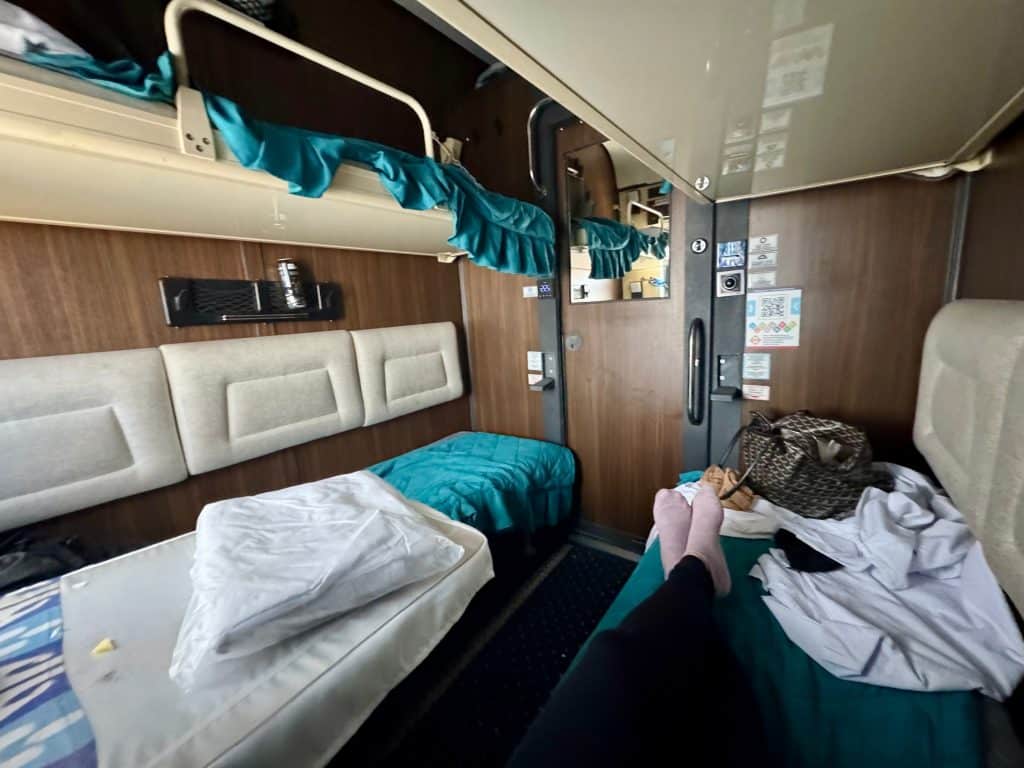
I’m putting this near the top because it’s the most important tip on this list. Traveling by train is the best way to get around Uzbekistan — I took three different kinds of trains and found them fast, efficient, affordable, and very pleasant.
But train tickets tend to sell out extremely fast — especially the high-speed Afrosiyab trains running from Tashkent to Samarkand and Bukhara.
They often sell out the day they go on sale (!), which is 45-60 days before the trip.
Can you just take the bus instead? Of course you can — but it takes much longer. My high-speed train from Tashkent to Samarkand took two hours, while the bus takes about five hours. One of my guides told me his bus took seven hours due to traffic.
You can book train tickets on your own at railway.uz, or you can have an Uzbek travel agency book them for you at a markup.
I used the agency Orex CA to buy one of my tickets, just to see what the experience was like, and it was fine, but I could have done it myself with no issues. They charged me 40 USD for a ticket that would have cost about 17 USD, so expect a decent markup.
And if your train is sold out, contact an Uzbek travel agency. I heard that many agencies hold onto tickets on the popular routes, and release them close to the date if nobody buys them. So keep looking, just in case.
If you’re a bit nervous about buying the right tickets, I recommend reaching out to an agency at least 60 days in advance and having them order them as soon as they go on sale. The extra cost might be worth the peace of mind to you.
Whenever I visit a predominantly Muslim country, I get women asking me if it’s necessary to wear a headscarf in public. In most Muslim countries, a headscarf is only necessary when visiting an active mosque.
But I do like to dress similarly to local women when I travel solo. Sometimes that means wearing a long tunic that buttons to my neck (Southern Lebanon), sometimes it means wearing jeans even though it’s roasting out (Cartagena, Colombia).
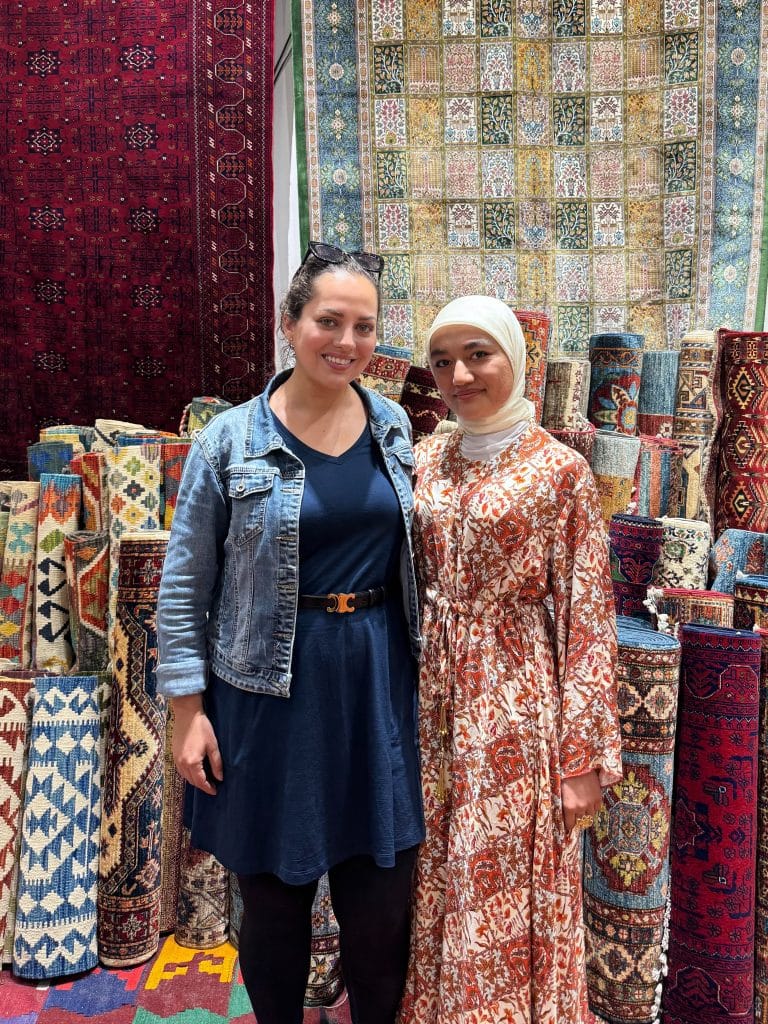
So how do women dress in Uzbekistan? Some women wear the hijab and dress traditionally in long, loose dresses. Some women wear the hijab and dress in more modern ways, like blazers, wide-leg jeans, and bomber jackets. Some women don’t cover their hair and dress western-style.
But I will tell you this: you do not see Uzbek women wearing short skirts, overly tight clothing, or showing their cleavage. Many women dress stylishly, but they don’t show skin.
And that made me glad that I packed a wardrobe that covered my knees, shoulders, and cleavage.
For my April trip, I mainly wore two kinds of outfits: 1) a knee-length dress over cropped or full-length leggings with a denim jacket on top, or 2) a t-shirt and jeans. I would add on a few more layers (a long-sleeved wrap top, a cardigan) if it was cold.
For a few hours on my last day in Tashkent, I did take off the denim jacket and just wore the sleeveless dress over cropped leggings. Tashkent felt modern enough that showing my shoulders didn’t feel disrespectful.
For men and mascs, if you’d like to dress similarly to Uzbek men, I’d stick to wearing long pants and avoid shorts and tank tops. And PLEASE do not go for a jog shirtless.
I did see some women tourists who were dressed revealingly. In Khiva, I saw a western woman in her sixties wearing leggings as pants with a t-shirt that didn’t cover her butt. And in Samarkand, I saw two twenty-something Russian women in short shorts and tank tops.
They stood out in a bad way. Don’t be that person.
If you try to summon an Uber in Uzbekistan, you’ll be out of luck — here, the app of choice is Yandex Go, a popular app in former Soviet republics. Be sure to download it before your trip, because you need a phone number to confirm it.
Yandex is vital in Uzbekistan. You can use it as a taxi app, as a food delivery app, and you can even send items to be delivered elsewhere.
And Yandex rides are shockingly cheap. Most of the time, my rides were under 5 USD for a ride across the city, usually 2-3 USD.
I had a lot of early morning departures in Uzbekistan, the earliest at 3:30 AM (yuck!), and I never had to wait longer than five minutes for a Yandex driver. That impressed me.
(There was one exception though: at train stations shortly after trains arrived. When trains arrived, there was usually around a 15-minute wait for a Yandex. And I couldn’t order them early because there usually wasn’t any phone signal until we got to the station.)
As a travel safety educator, I never visit anywhere without an eSIM — and that’s especially important for Uzbekistan.
I used an eSIM from Holafly for my trip, and it worked very well. I ordered it before my trip, chose the specific dates for it to be active, and it started working as soon as I landed in Tashkent.
In Uzbekistan, the single most important reason to get an eSIM is being able to order Yandex taxis from anywhere. I found this helpful when it was too dark to walk back to my hotel. I also found having an eSIM very helpful for navigating my way with Google Maps, translating menus, and communicating with my guides via WhatsApp.
Free wifi is not as widespread in Uzbekistan as it is in other countries, and often wifi networks require an Uzbek phone number in order to connect. I was so glad I had unlimited data and didn’t have to deal with that.
I found that my Holafly eSIM had excellent signal in the cities of Tashkent, Samarkand, Bukhara, and Khiva, though you shouldn’t expect signal on trains in the middle of nowhere.
I also love Holafly’s benefit called Always On. Every Holafly eSIM automatically provides 1GB of emergency data per month in more than 70 destinations. If you have a delayed flight or unexpected layover, you’re covered.
You can get 5% off your Holafly Uzbekistan eSIM with the code HOLAKATE, and 10% off monthly plans.
This is one of the stranger things I noticed in Uzbekistan — seat belts are rarely accessible. In a typical Yandex taxi, either the seat belts will be pushed deep beneath the seat cushions, or there will be a cover on top of the backseat with no holes for seat belts.
In fact, I counted up the Yandex and taxi rides I took in Uzbekistan. I took 19 rides and there was a usable backseat seatbelt FOUR TIMES. That is it.
The craziest incident was with my driver who picked me up from Khiva’s train station. I noticed there were no seatbelts in the backseat, as usual, and he beckoned me to sit in the front seat, which had a working seatbelt.
I went to put my belt on and he got angry — gesturing to me, “No, don’t do that, you don’t have to do that.” I nodded and smiled and put it on and he got angrier, shaking his head.
“No. You are good. They are bad,” I told him, giving him a thumbs up while giving a thumbs down to the other drivers. He eventually gave up and drove me to my hotel.
From talking to locals, I learned that many Uzbek drivers think it’s an insult to their driving skills if a passenger uses a seatbelt.
So how do you deal with this? If you’re traveling solo like me, sit in the front seat. The front seat usually has a working seatbelt.
If it’s important to you to have working seatbelts in the backseat on every trip, you can hire a car service. These drivers tend to be more professional than Yandex drivers, and you can confirm for certain whether they have working seatbelts.
It will cost a lot more than 2-3 USD per ride, but it will cost less than hiring a driver for the day in France or Japan or Australia.
Many people visiting Central Asia for the first time decide to see the region by a “Five Stans” tour taking in Turkmenistan, Uzbekistan, Tajikistan, Kazakhstan, and Kyrgyzstan. Why not knock them all out at once?
Honestly, I understand the urge. But these three-week tours are quite rushed and only take you to the busiest places, when the magic often happens in the quieter stops.
Instead, if you’d like to visit a few different nations, I recommend you pair Uzbekistan with one or two other countries. A Two Stan or Three Stan tour is much more reasonable.
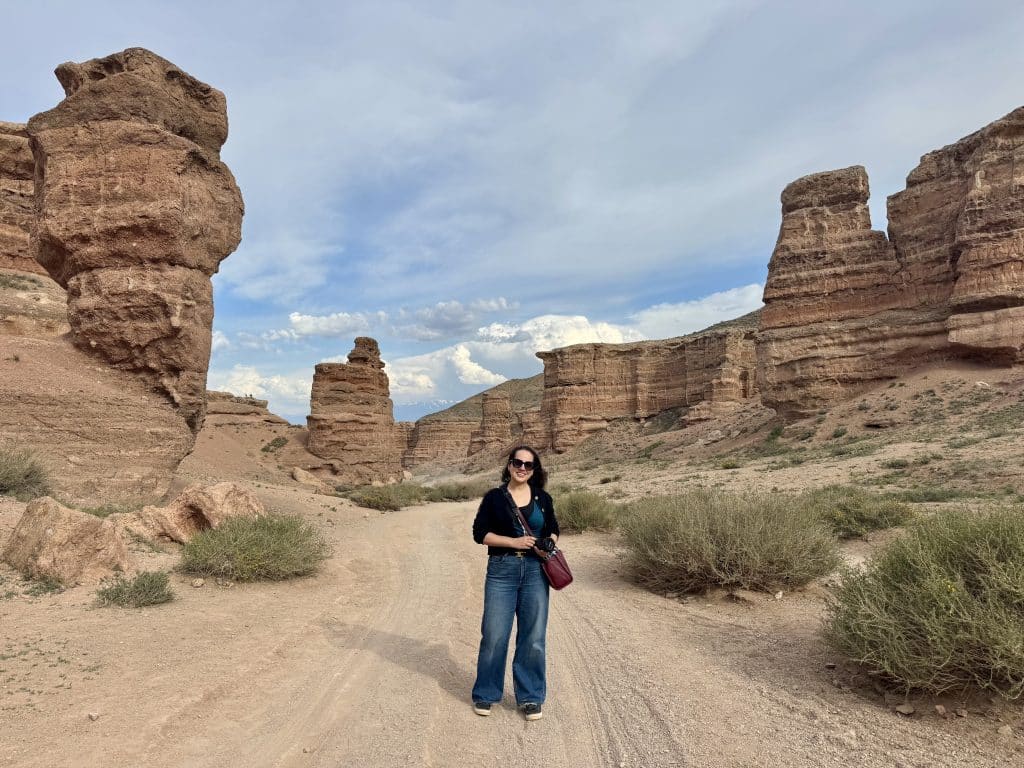
My 17-day trip to Central Asia began with five days in Kazakhstan, which was a good amount of time for Almaty and an overnight trip to Lake Kolsay, Lake Kaindy, and Charyn Canyon.
(My original plan was to do five days in Turkmenistan beforehand, but they rejected my Letter of Invitation, likely because I’m politically outspoken with a large following and They Do Not Like That. Oh well, it was their loss and guess what — I loved Kazakhstan!)
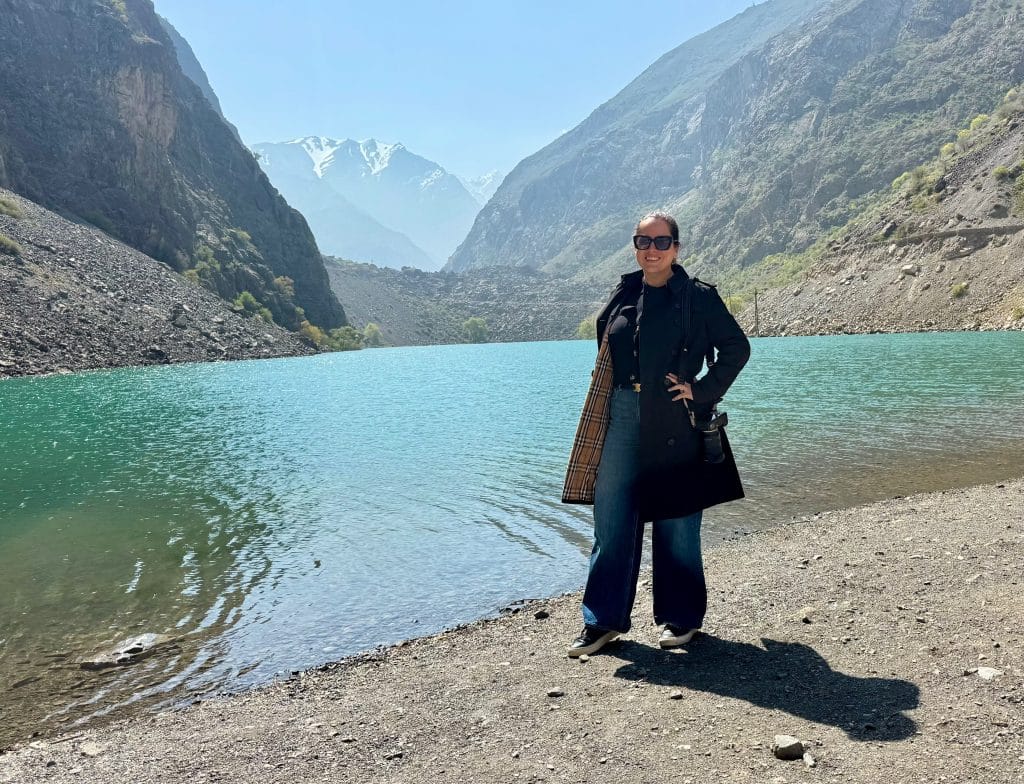
I then did a day trip to Tajikistan from Samarkand, visiting Panjakent, the Seven Lakes, and the UNESCO World Heritage-listed ruins of Sarazm.
This day trip is easy to add into any Uzbekistan trip, and Tajikistan is visa-free for many nationalities.
Resist the urge to knock out all of Central Asia at once. That’s really a two-trip endeavor.
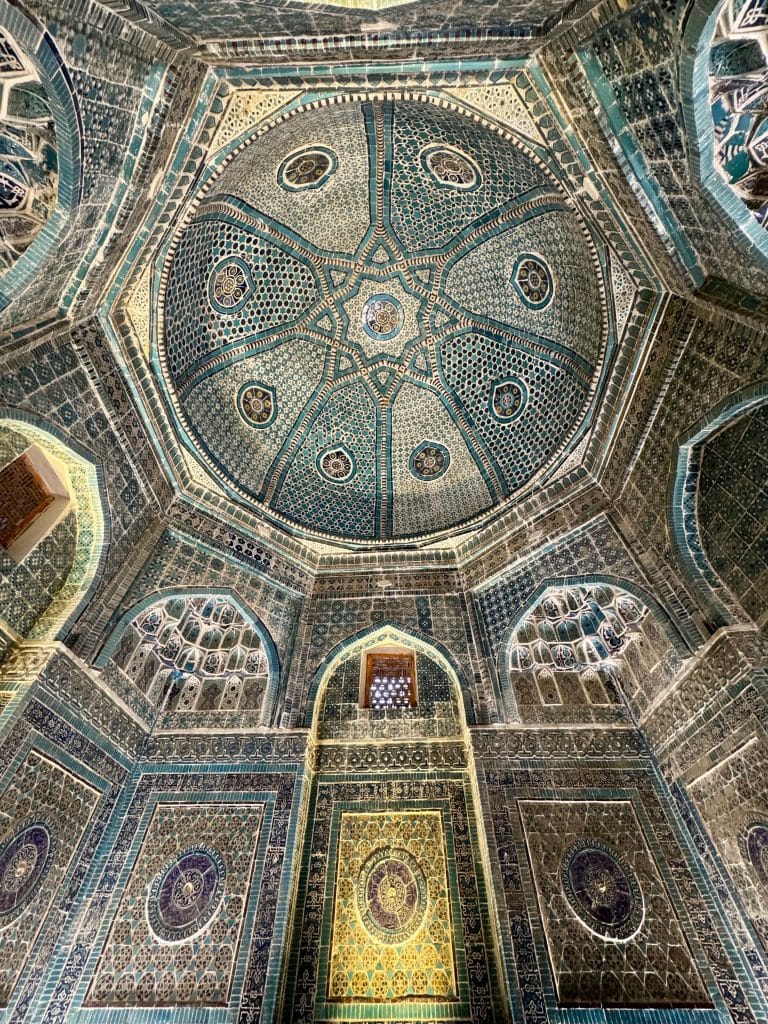
Now, this one is more for the serious photographers. Uzbekistan is a fantastic destination for photography — specifically, architectural photography.
The interiors of the buildings are filled with incredible geometric details — it’s the kind of art you can look at for hours and still discover new things.
However, it’s very difficult to photograph these interiors properly unless you have a wide-angle lens. Ideally, a very wide lens.
If you’re more of a casual photographer like me and you’d rather not cart around a ton of lenses, the iPhone has a pretty great wide-angle lens these days. While the quality is not what you’d get with most big lenses, I feel like it gets the job done.
Let’s compare two shots of the ceiling of the Aksaray Mausoleum in Samarkand:
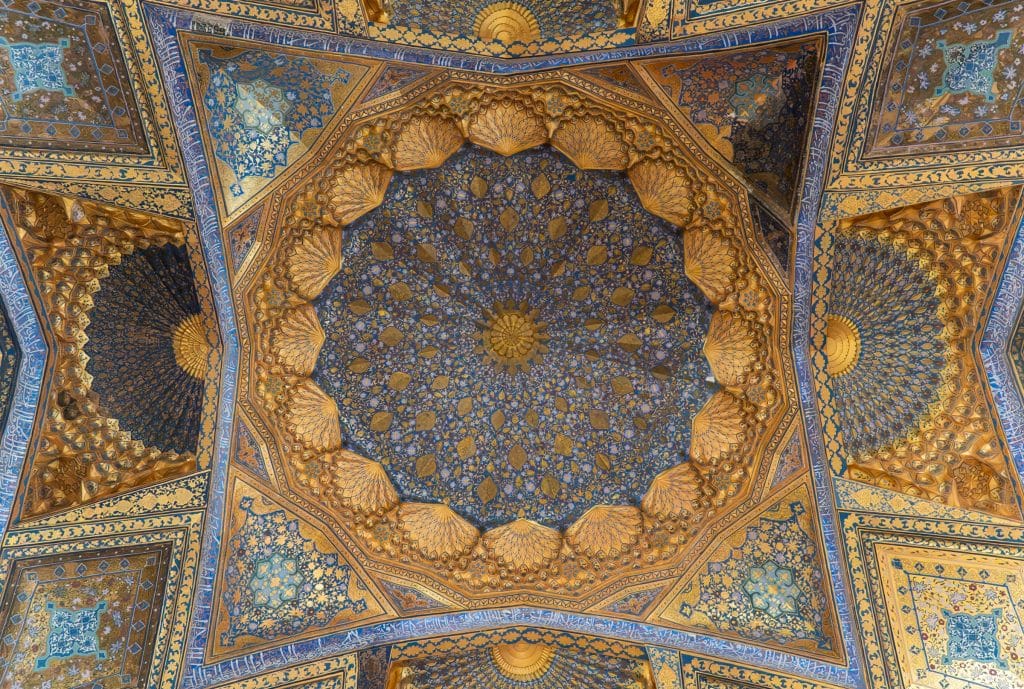
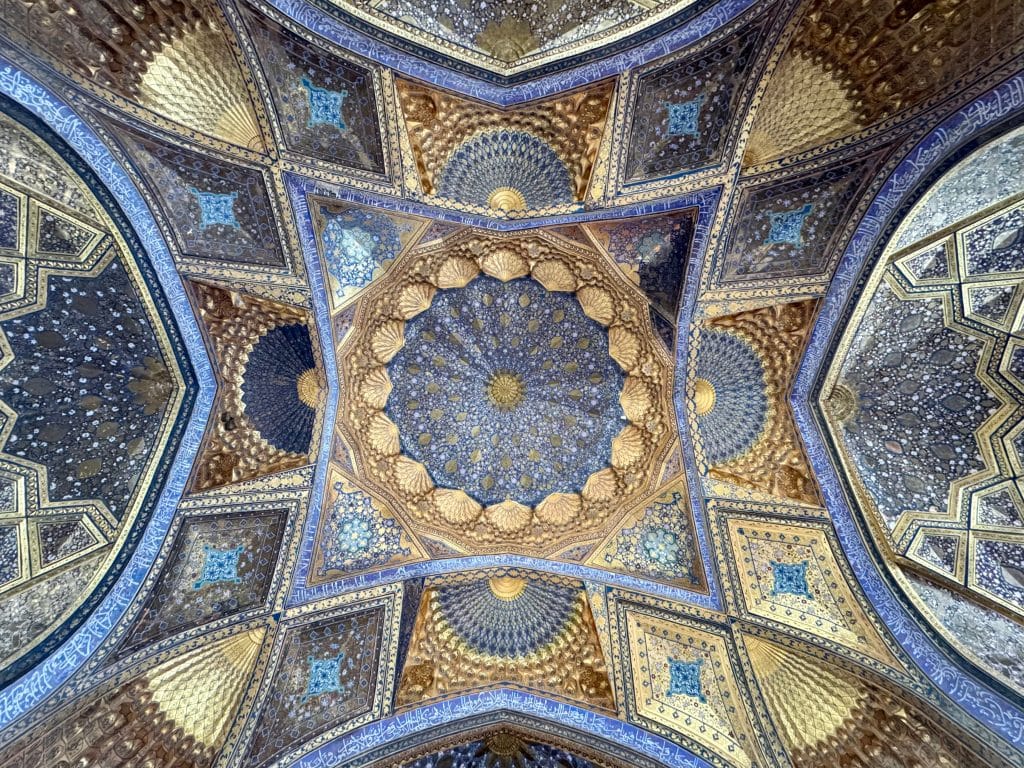
You can see what a difference it makes!
So if you’re a photographer, bring your wiiiiiiidest lens.
Don’t buy a special lens if it’s not in your budget, but perhaps consider renting or borrowing one if you’re keen on photographing the interiors of these buildings.
Or maybe just use your iPhone, like me.
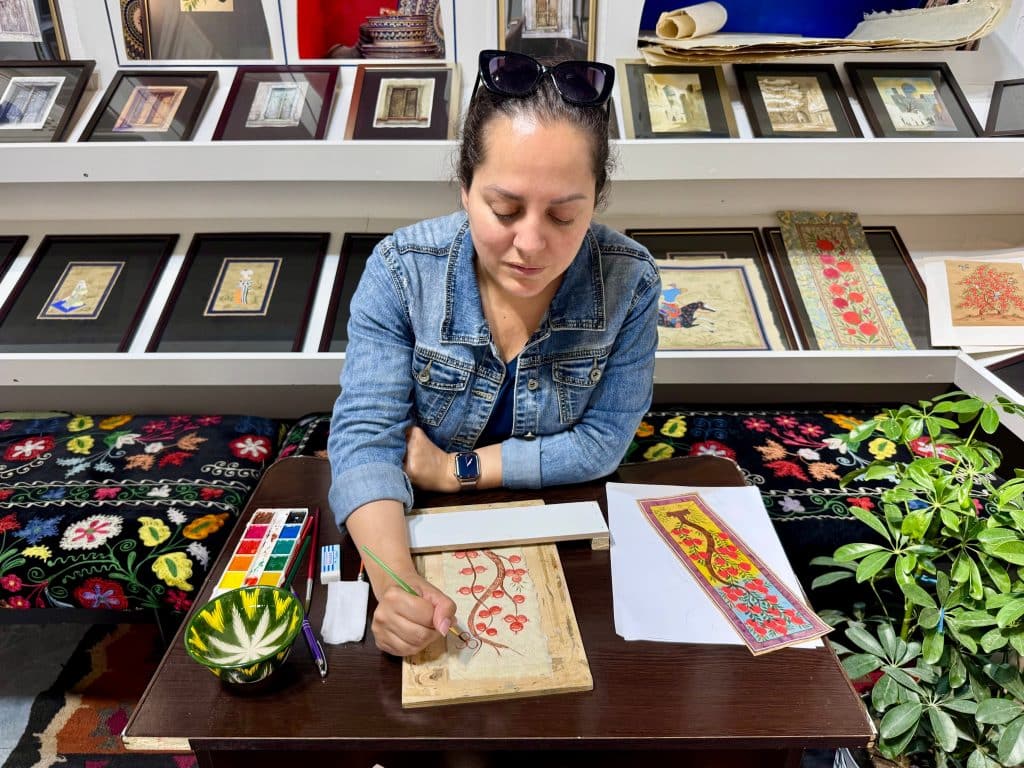
I learned two traditional crafts while in Uzbekistan — Persian miniature painting and suzani embroidery — and honestly, these were the BEST things I did on my trip.
Before my trip, a company called CraftnCulture Uzbekistan reached out to me, asking if I would be interested in any of their workshops. WOULD I EVER! Making things is right up my alley, and I knew it would allow me to get to know Uzbekistan even better.
Craftnculture offers workshops in Tashkent, Samarkand, and Bukhara in everything from plov-cooking and bread-making to pottery-painting and mosaic-making to knife-crafting and wood-carving.
In Bukhara, I took a Persian mini painting workshop from acclaimed artist Rafael Toshev, who guided me through painting a pomegranate tree with watercolors on silk paper. (The silk paper is a lot more finicky than it looks!)
This was SO MUCH FUN. I had forgotten how nice it is to just draw and paint and make art.
I had the best time painting my piece and getting to know Rafael. While we had a translator, Rafael and I soon realized we both spoke French, and we gabbed away the whole time. By the end of the evening, I promised I would send my father-in-law to his upcoming show in London this summer.
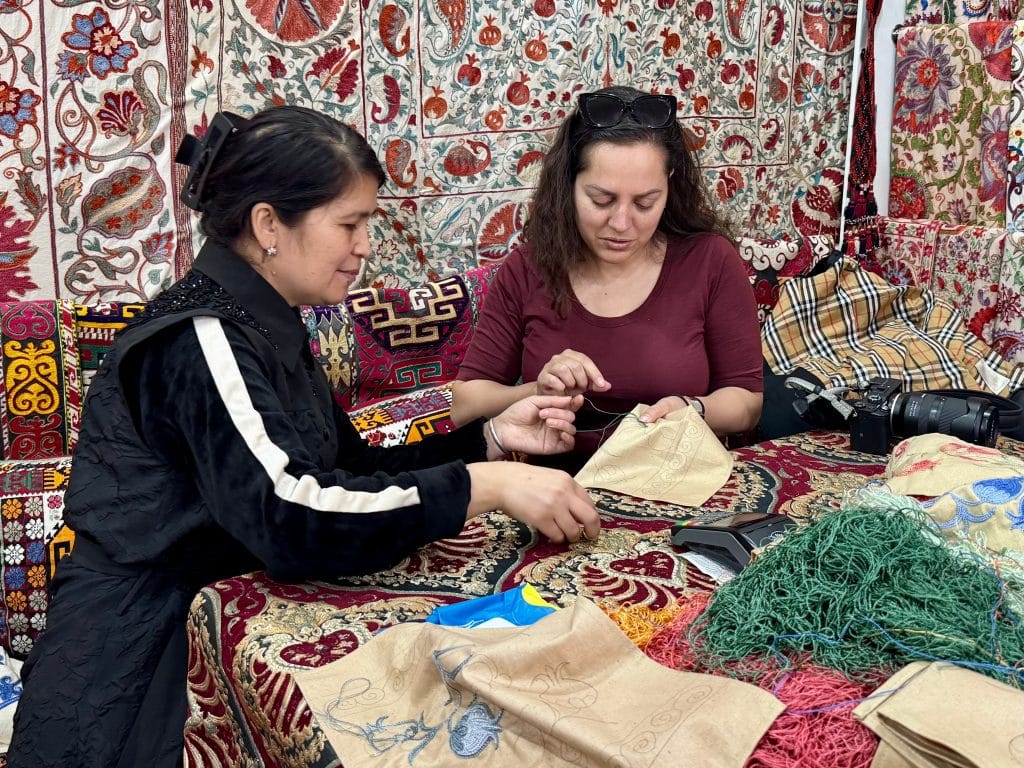
In Samarkand, I took a suzani embroidery workshop and learned the art of Uzbek embroidery. Artist Feruza guided me, teaching me three different methods of traditional stitching before we settled on the easiest stitch together.
I like to sew and embroider, so I wasn’t a complete beginner — but a beginner can absolutely do this. It takes some time to get the hang of the stitching, but soon you’ll go on autopilot and fall into a trance.
Feruza and I got to know one another, and she told me she teaches suzani embroidery to everyone in her family — including the boys. She even showed me pictures sewing at the table with her toddler grandkids.
Best of all, Feruza gave me enough thread that I can continue sewing my piece at home.
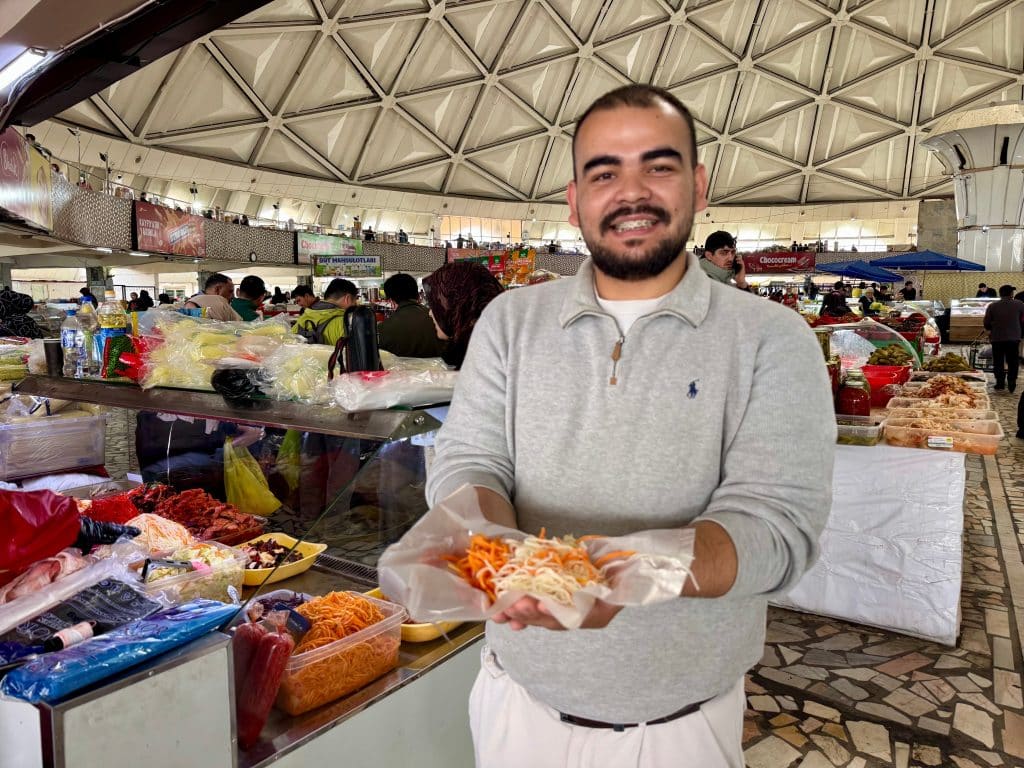
Finally, while in Tashkent, I met up with Craftnculture company owner Yusuf, who himself guided me on a food and metro tour, which was the perfect introduction to the country.
I got to know him and learn more about the company, and honestly, I’d love to send SO many more people his way. Craftnculture is doing things right.
(I paid for the Persian mini painting workshop myself and Craftnculture comped me my suzani embroidery workshop in Samarkand and a Chorsu Bazaar and metro station tour in Tashkent.)
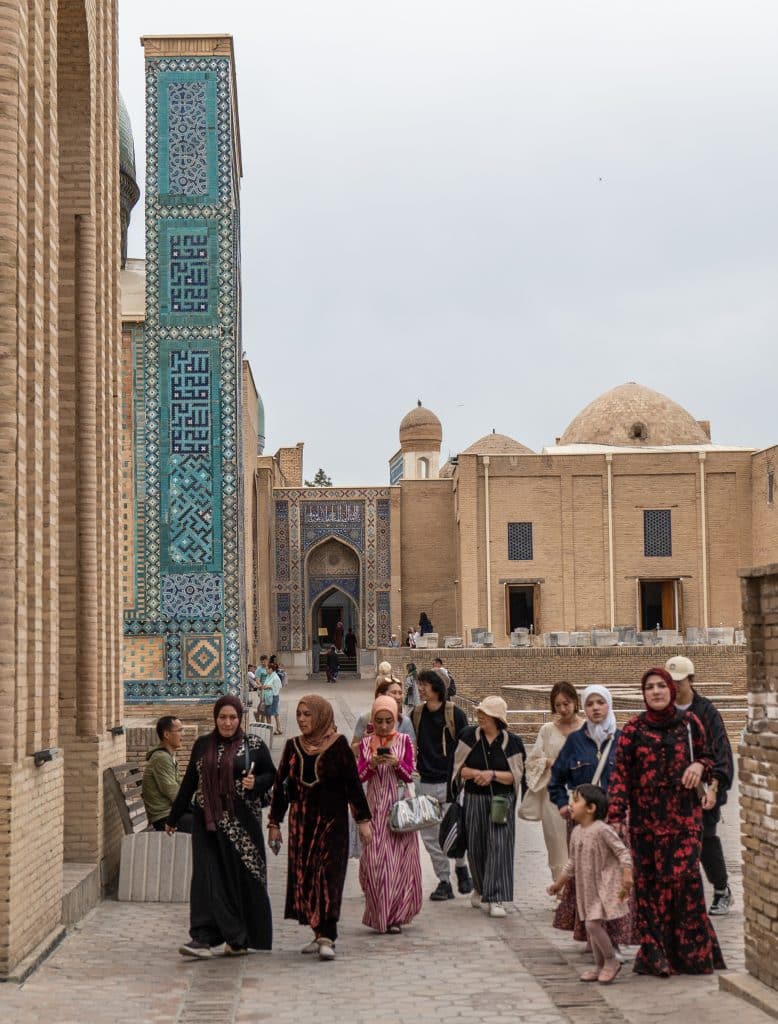
In many parts of the world, English is the go-to second language. In Central Asia, however, locals are likelier to speak Russian as their second language, especially if they’re over 40 or from a rural area.
In fact, people in Uzbekistan often defaulted to Russian with me, saying spasibo for thank you rather than the Uzbek rahmat.
And a few times, young women spoke to me in English on behalf of their families, their mothers and aunts smiling behind them.
Knowing a bit of Russian can be very useful here, and I recommend that you learn a few Russian words. Yes, no, hello, thank you, and numbers 1-5 can make communicating in Uzbekistan a bit easier.
But you never know what might be useful. On my Tajikistan day trip, one of my fellow travelers spoke Farsi and our guide spoke Tajik back — those two languages are mutually intelligible, so they were able to understand each other!
 PHPTRAVELS v8
