Tokyo Itinerary: The Ultimate 1–5 Day Guide for First-Time Visitors
Japan is one of my top favorite destinations, and if you’ve been following my journey, it’s an obvious fact because I’ve been making multiple visits there every year — most of which are to the capital city of Tokyo. (Tokyo Itinerary)
Now, of course, who hasn’t heard of this vibrant city full of ancient traditions that are wonderfully contrasted by its bustling modernity? It’s definitely on everyone’s travel bucket list; and I’m sure that much like everyone else, you also want to make the most of this trip minus the stress of planning out your trip.
Well, don’t fret, because with my past experiences, know-how, and ‘passion’, I’m here to help you out with this DIY Tokyo itinerary! After all, I know how daunting it can be to map Tokyo out — believe me, I’ve been there — and it IS, without a doubt, a dense and massive metropolitan city that can easily be a separate country of its own.
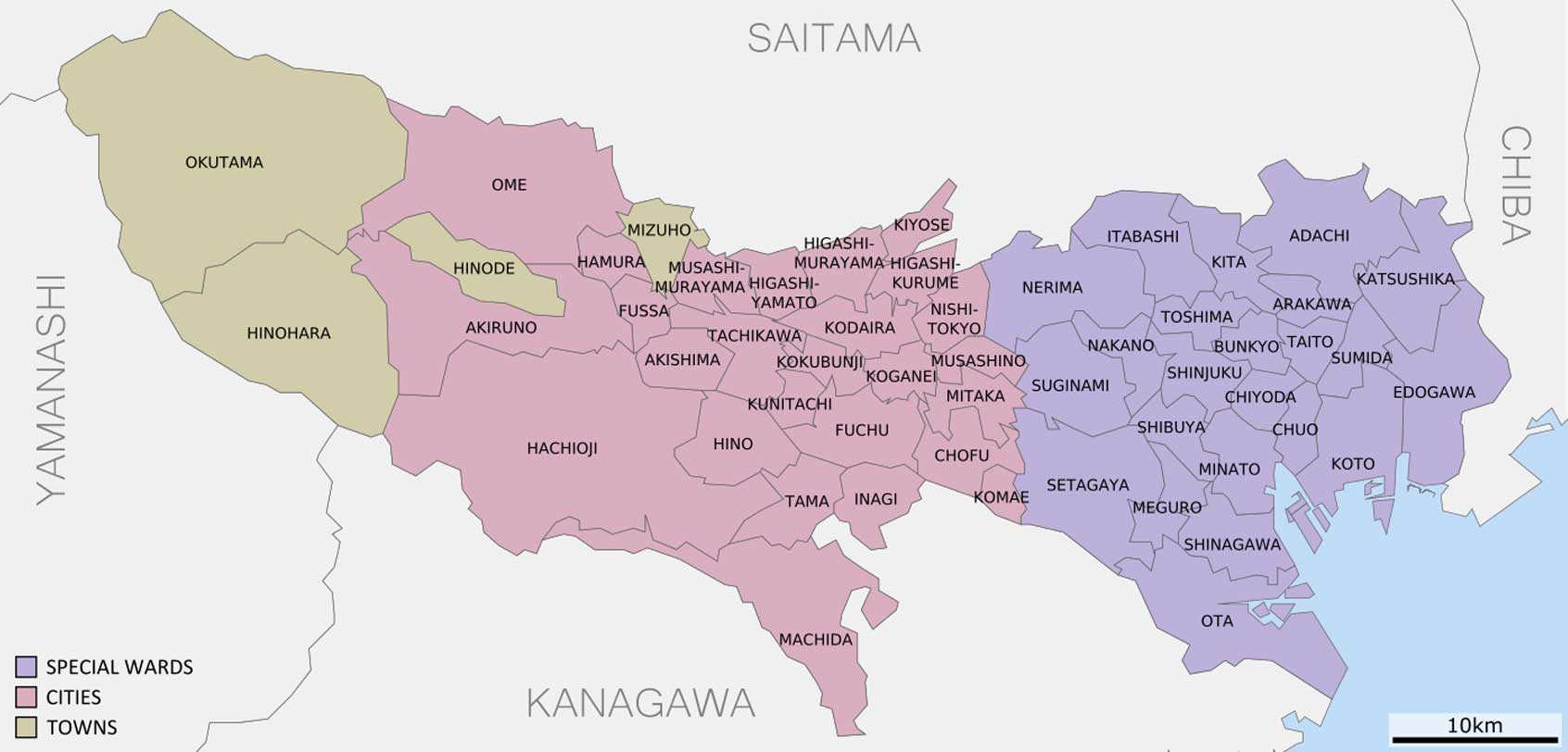
TRIVIA: With over 13.5+ million people across an area of 2,000+ km2, Tokyo (officially called the Tokyo Metropolis) is actually comprised of 23 special wards, 26 cities (Tama Area), 3 towns + 1 village (Nishi-Tama District), and several outlying islands. Now, not a lot of people know this… but the core or most populous part of Tokyo (which we travelers typically go off to) ONLY comprises a select few places within the 23 special wards.
As seen above, the PURPLE area in Tokyo is where the 23 special wards are found, and only some of the places in these wards are where tourists typically visit. (Image from Wikipedia)
Each of these special wards has its own major districts in which traveling from one district to another can take an hour — or even more! So YES, you will need some guidance; but as I said, I’m here to help you every step of the way with the help of this Tokyo itinerary guide. It is also totally customizable to fit any number of days that you might be spending.
TIP: It’s a good idea to crosscheck the prices with other popular travel insurance providers like World Nomads and HeyMondo (as my reader, you get 5% off)! However, take note that a travel insurance’s affordability typically means lesser coverage; so please always ensure that you read the fine print in order to decipher which travel insurance company is the right fit for you and your trip!
• • •
Tokyo Itinerary Guide
IMPORTANT NOTES: – The following section is in a tabbed format, so to see the next day’s contents, just click the headings below. – I will also cover other Japan destinations under the ‘Extras‘ tab below so that you can consider these places if you happen to have more days for your Tokyo itinerary trip, or if you simply want to see more.
REMINDER: Going from one place to another within Tokyo can often take 30 minutes to an hour — or even more! (Always check by Google Maps to verify your travel times). . Therefore, even if it is humanly possible to go to ALL of the attractions listed below per day for your Tokyo itinerary, it’s best that you DON’T because you will definitely be running around. This is why I suggest that you pick out the TOP spots that you really like and then save the rest for later, or for other days (in case you have more days in Tokyo).
» Day 1
» Day 2
» Day 3
» Day 4
» Day 5 & More
» Extras
Explore the West of Tokyo
◘◘ Shibuya
This is said to be a major nightlife area, but it’s also a major shopping and entertainment venue, especially because of its strong youth presence in fashion and culture.
★ Shibuya Crossing: Found in front of the Hachiko Exit, this is arguably the most prominent landmark of the district and the most photographed spot in the area. If you want to get a good view of it, go to the QFRONT building where a big Starbucks cafe is located. It’s best to come during rush hour to see an impressive sight, but be prepared for crowds inside the cafe. TIP: If you want a higher bird’s-eye view, prepare your zoom-in lens and go to Shibuya Hikarie shopping mall’s Sky Lobby on the 11th Floor.
Hachiko Statue:Hachiko is the name of an admired Akita breed dog in Japanese culture back in the 30s who exemplified superb loyalty to his owner even after his owner’s death. To this day, Hachiko has been remembered for these amazing traits, and that’s why this bronze statue of him in front of Shibuya Station remains a well-revered landmark in Japan. With that, don’t forget to stop by here for your Tokyo itinerary! ALTERNATIVE: For a lesser crowd, there’s a bigger statue of Hachiko along with his master, Professor Ueno, on the grounds of UTokyo or the University of Tokyo. .
For quirky fun
Karaoke: You must NEVER leave Japan without trying a typical Japanese karaoke! If you’re not from Asia, karaoke is NOT like the ones that you see in Europe or in the USA where the person goes on stage and sings in front of strangers in a bar. Asian karaoke is more personal and ‘closed,’ so you can unleash your singing powers in a soundproof room with people that you actually know (or you can also go alone). Of course, these Japanese karaoke rooms are high-tech and are even well-decorated depending on the place you go to. They might even provide free costumes so you can cosplay while singing your heart out! (And yes, they have English songs — some of them even have Filipino tracks.)
TIP: Rainbow Karaoke in Modi is incredibly stylish yet cheap; Karaoke Kan is famed for being the location of the movie (Lost in Translation)’s karaoke scene, or for the more standard chain, Big Echo is a good choice.
Love Hotel Hill: This is where you can find the biggest concentration of love hotels in Tokyo, and though it’s not a typical item on a ‘things to do in Tokyo‘ list, it can be an amusing thing in itself, especially if you’re traveling with your loved one — largely because of how the rooms are delightfully themed. Just be warned, though, that some love hotels don’t accept same-sex couples or even two foreigners. Nevertheless, you can rest in a room for 1-4 hours at around 1,500 yen ($15~) per hour or stay in a room overnight for as low as 7,000 yen ($68~). .
For nightlife Shibuya has a fantastic nightlife scene, with everything from intimate bars and live music venues to energetic nightclubs! One of the district’s best-known clubs is WOMB, which is especially popular among electronic music fans. However, clubs and events can change frequently, so I recommend checking their official websites for the latest schedules, admission fees, and age restrictions before visiting. TIP: Better yet, get this Tokyo Nightclub Pass that grants you UNLIMITED entry to the top 7 nightclubs in Tokyo! .
For shopping
★ Don Quijote (for everything under the sun), Loft(for stationery), and/or Tokyu Hands: These shops are great to include in your Tokyo itinerary if you’re looking for cheap souvenirs, novelty items, stationery, and more! The Shibuya branch of Don Quijote is the biggest in Japan, so make sure to drop by there.
Center Gai, Koen Dori, Spain Slope, and/or Shibuya 109: The first 3 are distinct shopping streets in Shibuya, whereas Shibuya 109 is a complex that you don’t want to miss out on if you want to do some serious shopping!
Shimokitazawa: This nearby district is a great ‘bohemian’ spot if you’re looking for vintage and second-hand items and clothes.
TIP: Harajuku is a fantastic area to explore, but accommodation options are more limited compared to neighboring Shibuya and Shinjuku. If you want convenient access to Harajuku’s shopping streets, Meiji Shrine, and Omotesando, I recommend staying around Shibuya or Yoyogi instead. For accommodation recommendations across different budgets, check out my guide to the best hotels in Tokyo.
For attractions
Meiji Shrine: Dedicated to the deified spirits of Emperor Meiji (Japan’s 122nd emperor) and Empress Shoken, this beautiful Shinto shrine is one of the most peaceful places to visit in Tokyo! Surrounded by a lush forest, it offers a relaxing escape from the busy shopping streets of Harajuku. While you’re here, you can admire the impressive torii gates, write your wishes on an ema (wooden prayer plaque), and observe traditional Shinto customs. If you’re lucky, you might even witness a traditional Japanese wedding procession!
For proper behavior when visiting a shrine, you can read this guide.
TIP: If you want to witness a traditional Japanese Shinto wedding, head here around 10AM and try your luck!
Yoyogi Park: A typical meeting place for Japanese people from all ‘walks of life’. Since it’s just near the trendy Harajuku, you will normally find crowds of band members, lolitas, cosplayers, and fashionistas in interesting clothing (they’re sometimes concentrated around Jingubashi or the bridge near Meiji Shrine). Taking photos of these people in fancy clothing is perfectly fine, but it’s best if you ask for permission first since not all of them are there to please the crowd — they’re usually just there to hang out or do practices etc. .
For shopping
★ Takeshita Dori: The birthplace of Japan’s fashion trends, this is a narrow street that’s filled with captivating shops and cafes. It’s an extremely sought-out place in Tokyo (especially by fashionistas), so it can get very crowded here, especially on weekends. Some of the things you shouldn’t miss out on? The entrance — take a photo here as you see yourself flashed on the screen.
TIP: Wanna do a guided tour? Take this Harajuku half-day tour that will take you through Takeshita as well as grant you access to some of the district’s top cafes!
Cat Street: If you want to stray away from Takeshita Dori’s crowd during your Tokyo itinerary, this is the next best place to be.
Omotesando: If Paris has Champs-Élysées, Japan has Omotesando. If Takeshita Dori is more for low- to mid-level shoppers, Omotesando is more for older or wealthier shoppers. TIP: Drop by Espace Luis Vuitton Tokyo, which is found on the top floor of its building, to find an amazing art space — not to mention that the bathrooms are really fancy haha.
Daiso Harajuku: This is one of Japan’s famous 100-yen variety-store shops that offer affordable housewares, toys, stationery, decorations, bento supplies, gifts, and more!
Tokyu Plaza Omotesando Harajuku: If you’re into architecture, shopping, or trendy hangout spots, don’t miss these two neighboring commercial complexes! Omokado is especially famous for its kaleidoscope-like mirrored entrance and rooftop terrace, while Harakado, which opened in 2024, brings together creative shops, restaurants, and spaces inspired by Harajuku’s evolving culture. Both are worth checking out as you explore the area! .
For quirky fun
Kawaii Monster Land: If you love everything colorful, eccentric, and wonderfully over-the-top, this is one attraction you shouldn’t miss! Opened in February 2026, Kawaii Monster Land brings the playful world of Harajuku’s former Kawaii Monster Cafe back to life in a new immersive entertainment space beneath Takeshita Street. Expect colorful installations, interactive attractions, quirky characters, and plenty of photo-worthy spots. It’s a fun experience for anyone fascinated by Japan’s unique kawaii culture!
★ Purikura: Purikura runs like a photo booth — but different in a Japanese kind of way, and it’s widely popular among females. Through these machines, you can take photos of yourself or your friends in a studio-esque booth; after which, you will be digitally enhanced. By that, I mean automatically Photoshopped in a kawaii manner: bigger eyes, whiter skin, and a narrower face.
Mameshiba Cafe: If you want to snuggle adorable Shiba Inu dogs for 30 minutes, there is this small cafe in Harajuku that you could visit. Personally, I don’t find it worth it (nor do I support animal cafes in general), but I leave this up here so you can decide what to do.
– – –
◘◘ Shinjuku
As a major city center, Shinjuku has the busiest train station in the world (Shinjuku Station), it houses the administration center for the Tokyo government and holds a plethora of amazing things to do in Tokyo!
Where to eat in Shinjuku? Other than going to Golden Gai, Omoide Yokocho or Shin-Okubo Koreatown, go to…
Tokyo Metropolitan Government Building: Want panoramic views of Tokyo without paying for an expensive observation deck? Head to this impressive government complex in Shinjuku! Standing 243 meters tall, its twin towers have FREE observation decks where you can admire Tokyo’s sprawling skyline, and on clear days, you might even spot Mt. Fuji. Just make sure to check the official opening hours because the north and south observatories have different schedules and occasional closures.
TIP: Come back after dark for TOKYO Night & Light, a spectacular projection-mapping show displayed on the building’s exterior!
I recommend the southern tower since it shows a better ‘side’ of Tokyo (closes at 5:30PM), whereas the northern tower is best for night shots since it closes later into the night (until 11PM).
Shinjuku Gyoen: Best visited during the sakura and fall season, this place is just a stone’s throw away from Shinjuku station, and it is one of the city’s largest and most favored parks. Here, you will find three different gardens: a traditional Japanese landscape garden, a French garden, and an English landscape garden.
Samurai Museum: Interested in Japan’s legendary samurai (or bushi) warriors and mysterious ninjas? This interactive museum experience in Shinjuku is a fun way to learn more about their fascinating history and traditions. Depending on the experience you book, you can explore samurai armor and weapons, discover interesting historical stories, and participate in activities such as ninja-themed games or traditional warrior experiences. It’s a great addition to your Tokyo itinerary, especially if you’re traveling with family or love Japanese history!
Omoide Yokocho: This is commonly called “Piss Alley” but rest assured, it is not as disgusting as it sounds. Based next to the train on the west side of Shinjuku Station, this is almost similar to Yurakucho near Ginza — except that Omoide Yokocho features more varied tiny eateries that serve ramen (Japanese noodle dishes), sushi, kushiyaki (skewered grilled meat), among many others.
TIP: The shops predominantly only speak Japanese, so it’s best that you book here for a guided tour so you don’t miss out on anything during your Tokyo itinerary!
★ Golden Gai: Made up of a network of 6 narrow alleys connected with even smaller passageways, Golden Gai is a fascinating site to go to for a drink. With over 200 tiny bars and eateries, it can undoubtedly provide you with a glimpse of Tokyo’s past. However, don’t let the looks of these bars fool you; though they are small (fitting only around 5 customers), the prices are not low. After all, they typically serve well-off clients such as celebrities, musicians, artists, etc. But don’t back out just yet because even if most bars only welcome their ‘regulars‘, you as a foreigner can still get to experience the glory of Golden Gai because there are those who welcome non-regulars — this is best signified by the English menus that they would display outside their bar. (Take note that these bars don’t open until around 9 or 10PM).
TIP: Book here for a guided tour so you don’t have to fumble around.
Kabukicho: This is the entertainment and red-light district in Shinjuku, which is sometimes called the “Sleepless Town”. Unlike Amsterdam, which features prostitutes on the windows of its buildings, Kabukicho has a more subdued collection as it only includes hostess clubs, love hotels, massage parlors, and more (prostitution is illegal in Japan). Unless you want to avail these kinds of services during your Tokyo itinerary, I just find this an interesting place to see in Tokyo as a regular tourist. Rest assured, I felt entirely safe walking around here since it didn’t feel seedy. In fact, you might not even notice that you’re already in Kabukicho! Also, one particular thing about Kabukicho that I liked best to see or observe was the pachinkoparlors. (Pachinko is an insanely popular game in Japan that somehow resembles pinball.) .
For quirky fun
★ Samurai Restaurant: If you’re looking for something totally different from Tokyo’s temples, shopping streets, and traditional attractions, you should check out Samurai Restaurant in Kabukicho! Inspired by the extravagant entertainment style of the former Robot Restaurant, this attraction delivers an energetic performance filled with colorful costumes, flashing lights, music, dancing, and spectacular stage effects. It’s wonderfully bizarre in the most entertaining way possible and definitely a memorable Tokyo experience!
This is primarily a live entertainment show rather than a conventional restaurant, so check the ticket packages and performance schedules before booking.
Godzilla: Japan’s famous giant monster and pop culture icon, Godzilla, can be seen here atop Toho Cinemas. It’s a nice spectacle because he looks like he’s taking a peek from the building — seconds away from wreaking utter havoc.
Animal Cafes: Plenty of people would recommend that you go to Tokyo’s well-liked animal cafés such as cat cafés, micro pig cafés, owl café, rabbit café, goat café, etc. (There are lots of them found around Shinjuku such as Cat Cafe Calico, etc.). I don’t like them, though, because I’m uncomfortable with the idea of keeping multiple animals in such a small space with strangers that they’re not that accustomed to — but I leave it up to you to decide what you would do.
Explore the East of Tokyo
◘◘ Asakusa
This is said to be the center of Tokyo’s shitamachi (“low city”) — which means that it’s an ‘olden’ district where you can get a feel of how Tokyo was in the past decades.



 PHPTRAVELS v8
