
This post may contain affiliate links. We may receive a small commission, if you make a purchase. Read Disclosure.
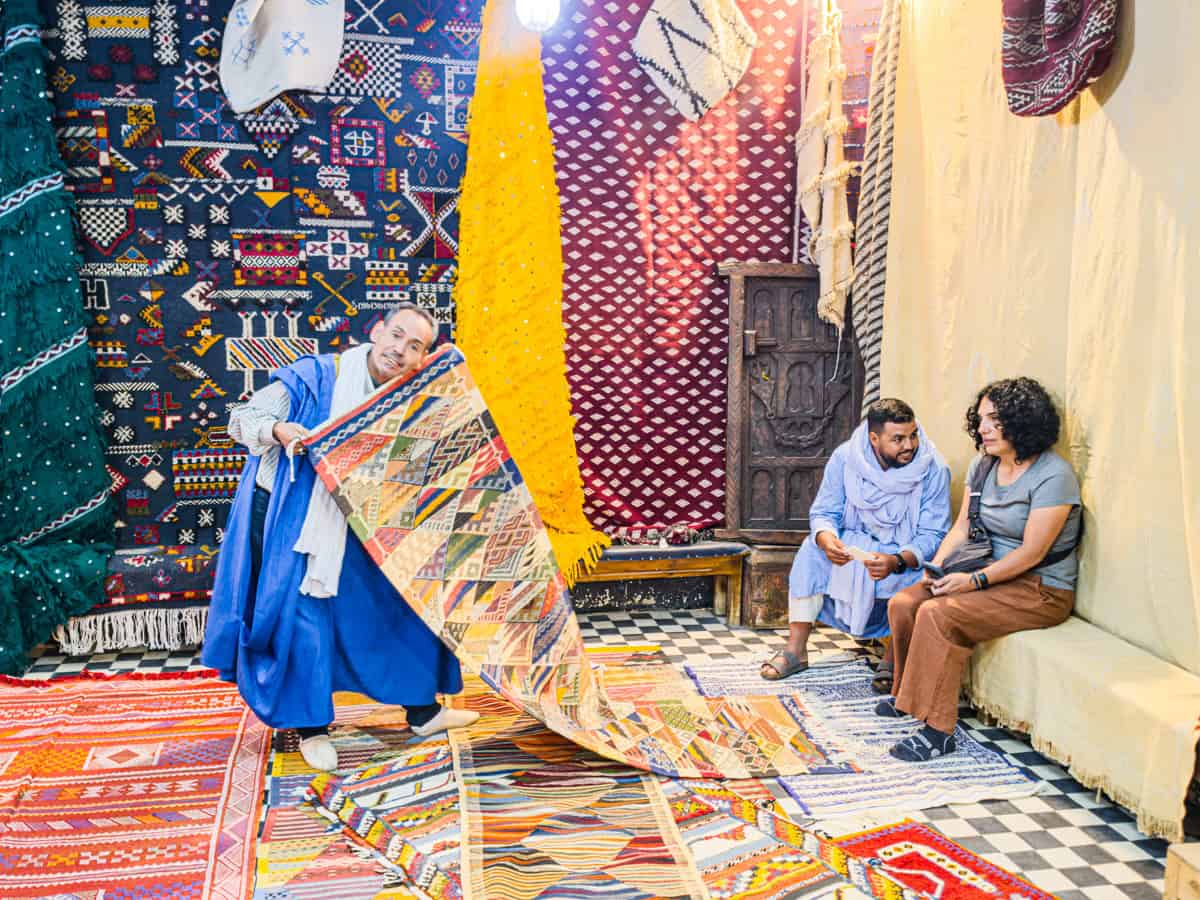
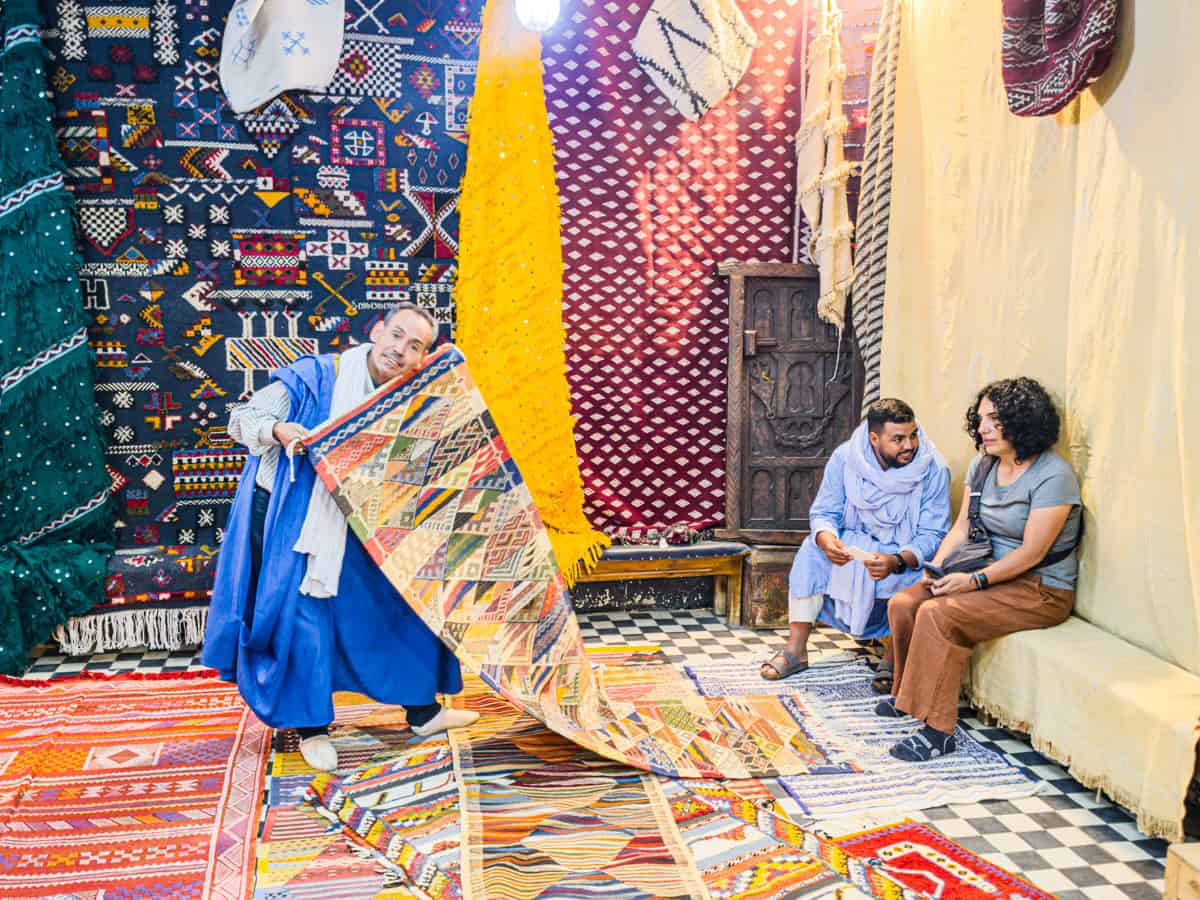
Partway through our stop at a Berber women’s carpet cooperative in Tinghir, on the long drive from the Dades Valley to the Sahara, I found the carpet. I could already see it on my bedroom floor. Then the seller told me the asking price, and I knew there was no number I could afford that wouldn’t insult him.
“Give me a price,” he said. I told him I’d rather not, because it was going to offend him. He kept asking, so I finally said my number, and he turned and walked off looking thoroughly disgusted (I did warn him). We both laughed about it, and I left the carpet where it was.

I spent nearly two weeks in Morocco in October 2026, two days on my own in Marrakech and then ten days leading 12 women for Your Limitless Adventures on our 10-day Morocco itinerary. This is how to haggle in Morocco, built from my wins and my very public losses, and what I’d buy on the road from Marrakech to Fes (plus what I’m still kicking myself for leaving behind).
How do you haggle in Morocco?
As of November 2026, the usual approach in Morocco’s souks is to open at about a third of the seller’s asking price and settle somewhere near half, which locals told me is a fair finish for both sides. Shop when the Marrakech souks open, around 9 or 9:30am, when sellers hope for a lucky first sale. Keep it friendly, and walk away if the price doesn’t feel right. Carry dirhams, because card machines in Morocco can’t be relied on.

Haggling in Morocco is expected in the souks and markets, and it works best as a friendly conversation. These are the rules I’d follow next time, most of them learned the hard way.
The best Morocco souvenirs come from the places that make them, so buy argan oil and spices in Marrakech, carpets on the road to the Sahara, fossils in Erfoud, and ceramics and leather in Fes. These are the things our group bought and the places I’d shop again.

Argan oil is pressed from the kernels of the argan tree, which grows in southwestern Morocco, and you’ll see it in every second shop in the Marrakech souks. I’d already bought a bottle in that 450 MAD souk bundle before Mo took us anywhere. Souk versions of argan oil and herbal remedies aren’t always what they’re sold as.
For anything going on your skin or into your body, ask your riad or guide for a pharmacy they trust. Mo took a few of us to Herbalism Marrakech, a herbal pharmacy set up inside what looked like an old church, pews and all (we cackled about that). The man who ran our session took one look at a group of women of a certain age and walked us through every oil and remedy he promised would take at least ten years off.

I came out with argan oil, cactus oil for my skin, black cumin and eucalyptus for digestion and Craig’s sinuses, and orange blossom for sleep. The pharmacy costs more than a souk stall, but I trusted what I was buying, and it was still far cheaper than skin care that promises the same results at home in the US. My bundle cost me around 70USD You’ll find the rest of that day in our things to do in Marrakech guide.

Spice stalls fill the lanes, and their smell, mixed with fresh mint and incense, is one of the first things you’ll notice shopping in the Marrakech souks. My spices came in the same bundle as my argan oil, bought from the seller I bargained so badly with. If you’re planning a cooking class (we did ours in Fes), buy your spices after it, once you know which ones go into a tagine. I bought the classic Moroccan spice, Ras El Hanout, and am yet to cook with it!
Café des Épices sits right on the spice square, and it’s a good place to rest your feet between stalls. Our 3 days in Marrakech itinerary shows how to fit the souks around the palaces.

If buying a carpet in Morocco is on your list, think about holding off on the Marrakech souks and buying from a cooperative instead. We stopped at Maison de Cadeaux Berberes, a Berber women’s carpet cooperative in Tinghir, where the carpets are woven by Berber women and the money goes back to them. The selling was done by men, and one of the women showed us how she spins the yarn. Mint tea was poured, and nobody was pushed hard.
Some of the women in our group bought small rugs to hang on the wall, and others bought bigger ones for their floors. The range of sizes and prices at Maison de Cadeaux Berberes was wide. If you find a carpet you love and you already know the spot in your home it’s going to, I’d buy it. A handwoven Moroccan carpet is one of the best souvenirs you can bring home. Teh carpet I loved was $2,600 USD. My $300 offering was not accepted!!
The last time I bought a carpet in Morocco was 1998. About 12 of us were traveling Europe in three camper vans, and from Gibraltar we took the ferry across to Tangier for the day. We were herded into a carpet shop, the men in one room and the women in another, handed mint tea and sold to very hard. We’d all sworn we wouldn’t buy a thing, and we laughed so hard walking out to see how many of us were carrying rugs. I was one of them. Mine was a wedding present for my sister, and it cost me about $100.
The Tinghir cooperative felt nothing like that day in Tangier, and having Mo there made everyone more relaxed. The cooperative stop is day six of our 10-day Morocco itinerary.


In the Marrakech souks, you can watch dyers mixing the colors for the silk and cotton scarves that hang everywhere. The scarf seller who found me photographing them wound a scarf around my head in the different ways Moroccans wear them before he steered me toward his father’s shop (and you know how that went).
On the drive into the desert, we stopped at Desert Bass Brothers Traditional Store in Ksar Mellab, where the women dressed us up in Berber outfits, coin belts and headscarves for photos before we chose our own scarves (part of a welcome gift from Christina, the founder of YLA). A scarf earns its place in Morocco. It keeps blowing sand off your face in the Sahara and the sun off your neck. I bought the first pink one that caught my eye, because I’m a terrible shopper and too much choice overwhelms me. Our Sahara desert camp guide has the rest of that day.


Fes is known for its blue and white pottery and its zellige, the mosaics made from hand-cut pieces of glazed tile. At Mosaique et Poterie de Fes, a ceramics workshop just outside the medina, we watched potters at the wheel and tile cutters chipping out mosaic pieces, then shopped. Several women bought pieces for their homes, and I bought a little dip bowl and some egg cups for Craig (he loves his boiled eggs). This cost me about $40 USD
A few of the women found similar ceramics for less in the Fes medina later that afternoon. I was happy to pay more at the workshop because its glazes are lead-free, which matters for anything you’ll eat from. If you buy in the souks, ask whether the glaze is lead-free before you start haggling. And if you’d rather make your own souvenir, the workshop runs mosaic and tile-painting classes (my mosaic came out a little mismatched, which suits me). Our things to do in Fes guide covers the workshop and the class.


The leather shops around the Chouara tannery in Fes sell everything from jackets to bags, and the leather we touched was incredibly soft. You view the tannery from the shop terraces, holding a bunch of fresh mint under your nose against the smell. One woman in our group had a leather jacket made to measure, and it was delivered to our riad that same evening.
The same rules apply here. Open low, aim for half, and try on as much as you like. I didn’t buy anything, because my bank account was looking very dry by then, and I’ve regretted it ever since. The ladies paid around $400 for their jackets and the leather bags were about $15.


Erfoud, on the road between the Sahara and Fes, is often called the fossil capital of Morocco. The stone around it is packed with fossils, and at Pierre d’Erfoud, a workshop that cuts it into tables and basins, they were the clearest fossils I’ve ever seen. I wanted a piece of that stone in my home badly (two days later, the bar at our cooking class in Fes was made from it).
Then we found the crystal section, and I lost a very happy half hour in there. I love crystals, so I bought some crystal jewelry and gifts for my girls. Pierre d’Erfoud lists home delivery as part of its service, so if a table or basin calls to you, ask them about shipping before you leave. My jewelry and crystals cost about $30 USD.
In the Marrakech souks, a young man etched names into bracelets for us, and we all ordered some, many of us as gifts for daughters, sisters, nieces and friends. I ordered bracelets for me and my girls, with our names etched in Arabic. My own bracelet fell off at a rest stop on the drive out of Marrakech the very next day, and I didn’t notice until it was too late (I was just grateful it wasn’t one of the girls’).
In Fes, a few of us bought matching bright, colorful bags in the medina for $12.

My suitcase came home lighter than I wanted. I regret not buying a soft leather handbag in Fes, especially after seeing the ones the other women carried home, and I wish I’d bought more Fes ceramics while I was standing in the workshop. I’d also go back to the herbal pharmacy in Marrakech with a much longer list (I’ve seriously considered asking Mo to do a big shop for me and post it). And part of me still wants that carpet in Tinghir. Fes is the place to shop in Morocco, so save some of your budget for the end of your trip.
A little planning on cash and luggage saves a lot of stress at the counter.

Carry cash. Card machines failed on us twice in Morocco, both at restaurants, and one was a group bill of about US$400. Our guide sorted the second one out, but you won’t always have a Mo. Take out enough dirhams for what you plan to buy before you head into the souks and ask whether a shop’s card machine works before you start bargaining on anything big. There are no ATMs at the desert camps, so get cash before you head into the Sahara. Typically, bigger items like the carpets and leather jackets will take cards. They took cards at the ceramics workshop as well. Smaller purchases, especially in the souks will accept only cash.
The Moroccan dirham is a closed currency, so you can only buy it once you arrive. As of November 2026, Morocco’s Office des Changes allows travelers to leave with up to 2,000 dirhams in cash. Spend or change the rest before you fly, and keep your exchange and ATM receipts, because exchange desks can ask to see them before they’ll change dirhams back.
Carpet sellers in Morocco often offer to ship your purchase home. Before you pay, get the shipping price and delivery time in writing, and take a photo of your carpet so you know the one that arrives is the one you chose. All the women bought their bags with them to take home on the plane. Consider the shipping price and compare that to what it would cost if you checked in another bag at the airport! You could save a lot of money by doing that, especially if you are doing more shopping.
If you’re flying home to the US, the things you carry in your luggage count toward your duty-free allowance as a returning resident (usually $800 per person). Items you ship are treated separately, and since US Customs and Border Protection suspended the low-value duty exemption for shipments, you may owe duty and processing fees when your carpet arrives.
Pack light on the way in. Between argan oil, scarves, ceramics and Fes leather, it adds up fast, and the shopping in Fes comes at the very end of the trip. If you run out of space, buy an extra bag in the Fes souks, and wrap ceramics in your clothes for the flight.

Yes, in the souks and markets. Sellers expect you to bargain, and their first price leaves room for it.
Open at about a third of the asking price and aim to settle around half. Locals told me half is a fair finish for both sides.
Go when the souks open, around 9 or 9:30am. The lanes are quieter, and many sellers believe the first sale of the day brings luck. Most shops close around 9pm.
I’d buy from a cooperative where the money goes to the weavers, like the Berber women’s cooperative we visited in Tinghir on the road to the Sahara. Take a guide if you can and use the same haggling rules.
As of November 2026, Morocco’s Office des Changes lets travelers leave with up to 2,000 dirhams in cash. Change the rest before you fly, and keep your exchange receipts.
I came home from Morocco with argan oil, a pink scarf, a slightly wonky mosaic and a list of things I’d buy next time. If you’ve haggled your way through Morocco, tell me your best win (or your worst loss) in the comments, because I know I’m not the only one who’s opened too high. And if you’d like the rest of my Morocco stories as I write them, join me in The Golden Thread, my weekly travel newsletter.
More Morocco guides
 PHPTRAVELS v8
