
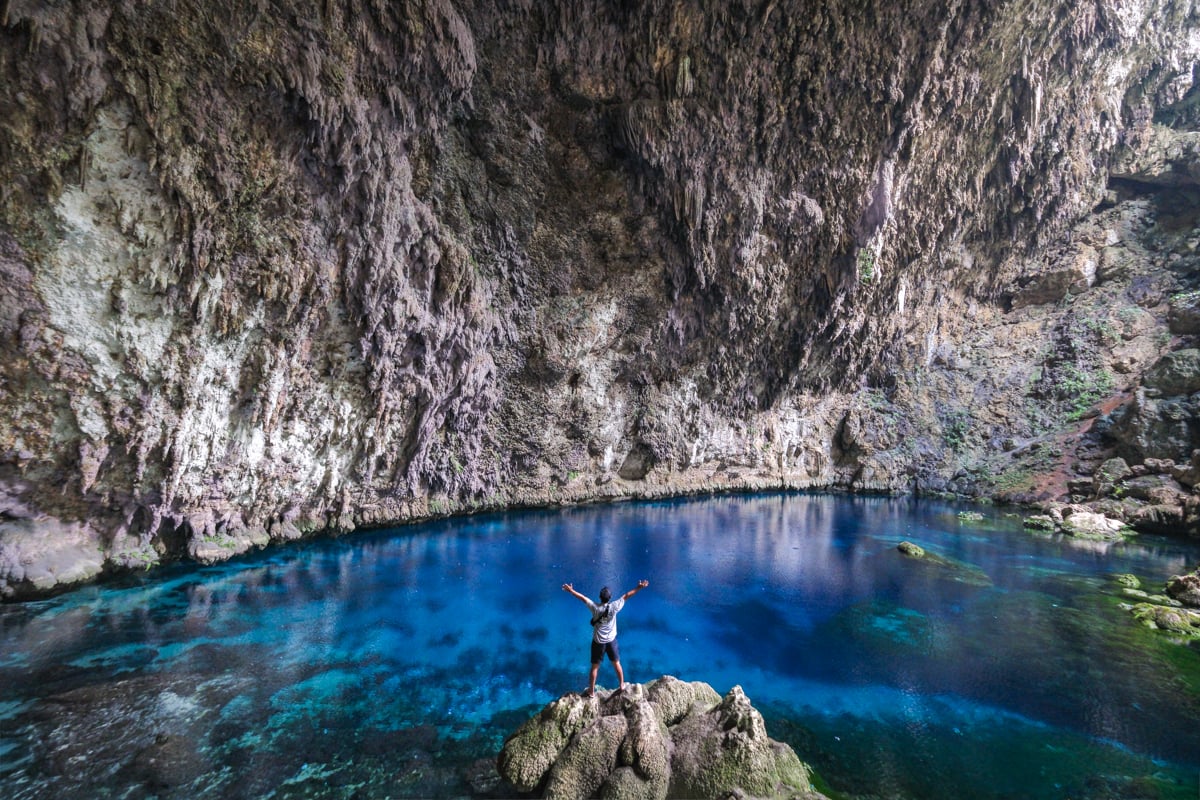
We recently spent a few days in Muna, an island in Sulawesi that has some spectacular caves, lakes, and natural sinkholes.
Most people visit Muna in conjunction with Buton, its neighboring island. They’re well connected by a short ferry ride, so it’s easy to go back and forth between the two islands.
The blue water sinkholes in Muna are kind of like the cenotes in Mexico, except without the crowds. There’s even a lagoon where you can swim with thousands of stingless jellyfish!
Another thing you can see in Muna is the prehistoric cave art, which is currently the oldest known human art in the world. It’s exceptional.
This travel guide will explain how to get to Muna, where to stay, and what to see and do on the island!
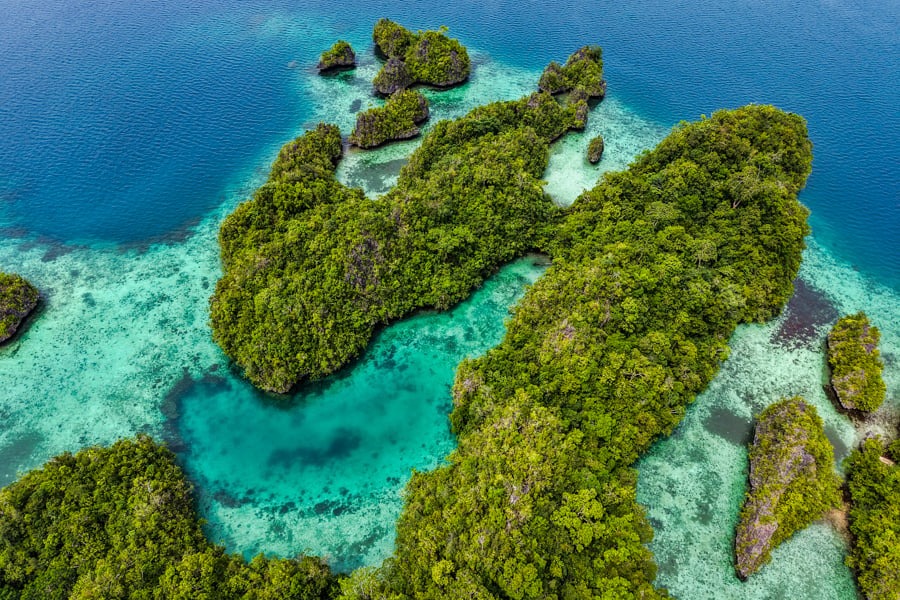
Drone pic of the lakes at Liwu Wandala
Muna island is located off the coast of southeast Sulawesi. There are a few ways to get there.
It has an airport in the main city of Raha (RAQ) with flights from Makassar (UPG), but there’s only one flight per day, as of 2026. The flight time is a little under 1 hour.
The other main option is to fly to Baubau (BUW) in Buton from Makassar, and then take the ferry from Baubau to the Wamengkoli harbor on the south end of Muna. That’s what we did. The ferry ride only takes 30 minutes, and it can bring cars and motorbikes.
Either way, if you’re flying from Bali or Jakarta, you’ll need to transit in Makassar on the way to Muna. You can shop for flights at Skyscanner.
The third option is to take a fast ferry from Kendari to Raha. It departs twice daily and the journey takes about 3 hours.
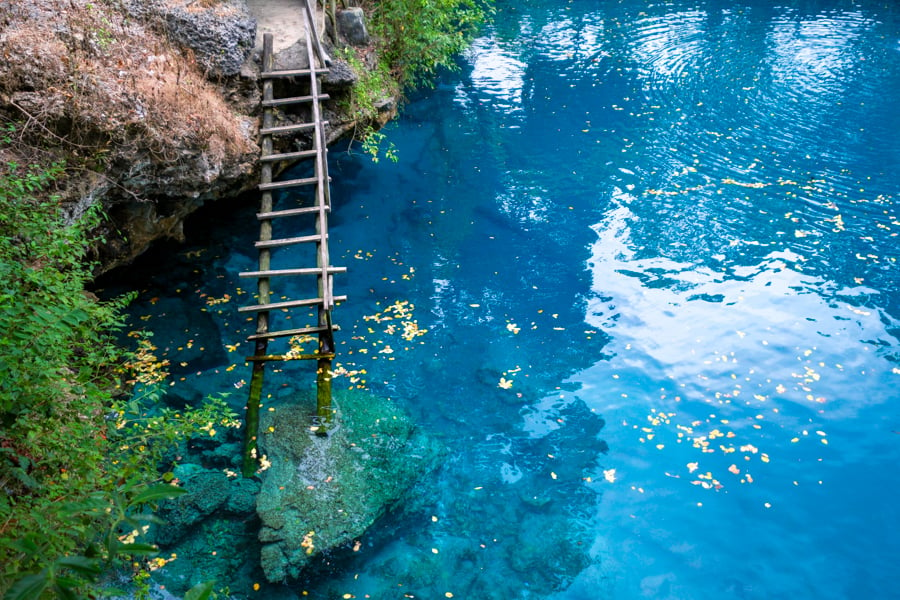
You can swim in cenotes at the Moko lakes
Once you arrive in Muna, the next question is how to get around.
You can rent a car or motorbike and drive yourself, or hire a driver with a car. We came to Muna from Buton on the ferry, and brought our driver and his SUV with us. It was pretty smooth and painless.
I’ll share some contacts for good tour guides later in the article. They can help arrange drivers, boats, and other things for you.
If you choose to drive yourself, the roads in Muna are in pretty good condition now. They used to be terrible, but most of the main roads were reworked recently.
There isn’t much traffic outside of town, so it’s not a hard place to drive by Indonesian standards.
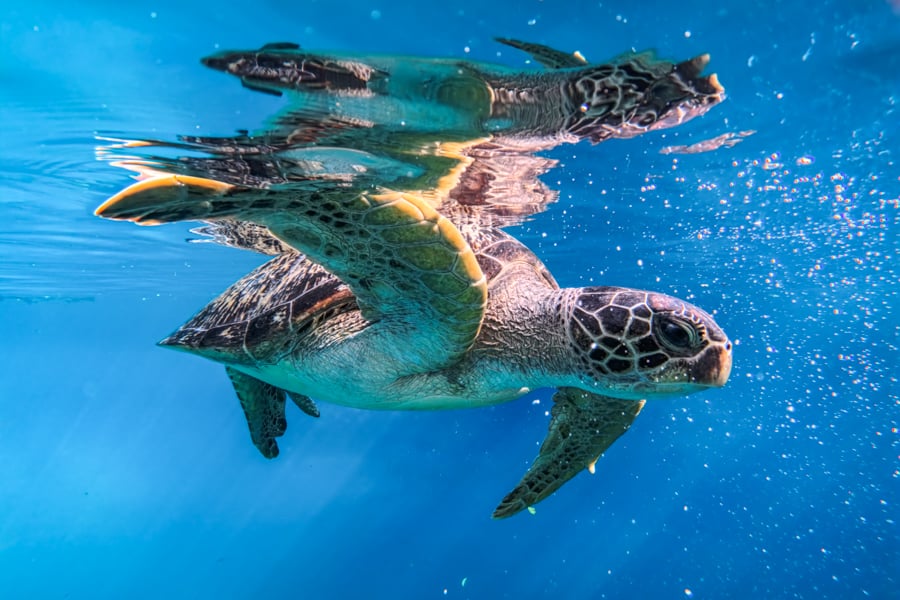
Sea turtle at the Moko lake
The Moko lakes are a group of blue water sinkholes in central Muna.
There are five lakes in total, all within a 1.5 kilometer stretch, but only three of them are good for swimming.
These are kind of like the cenotes in Mexico, except you might have them all to yourself!
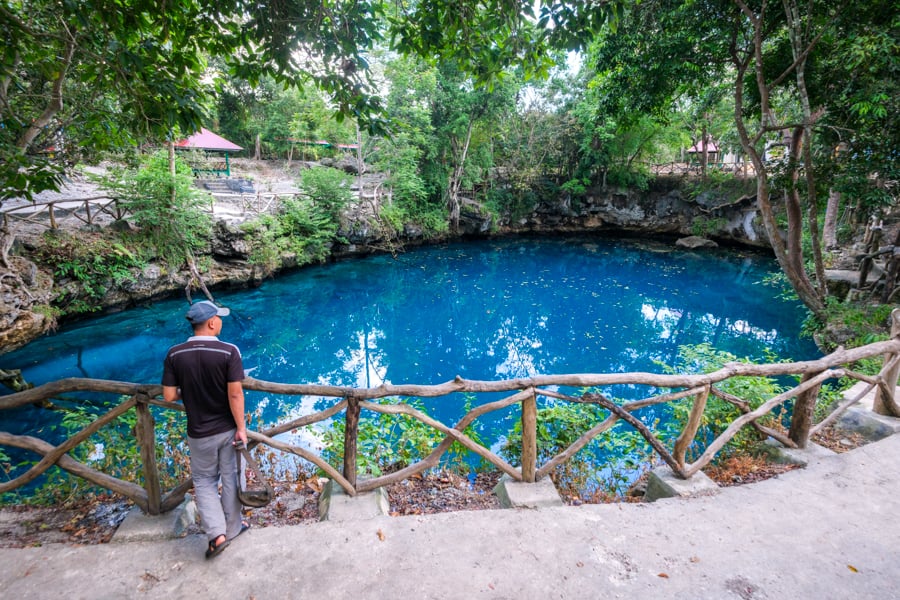
Moko Lake #1
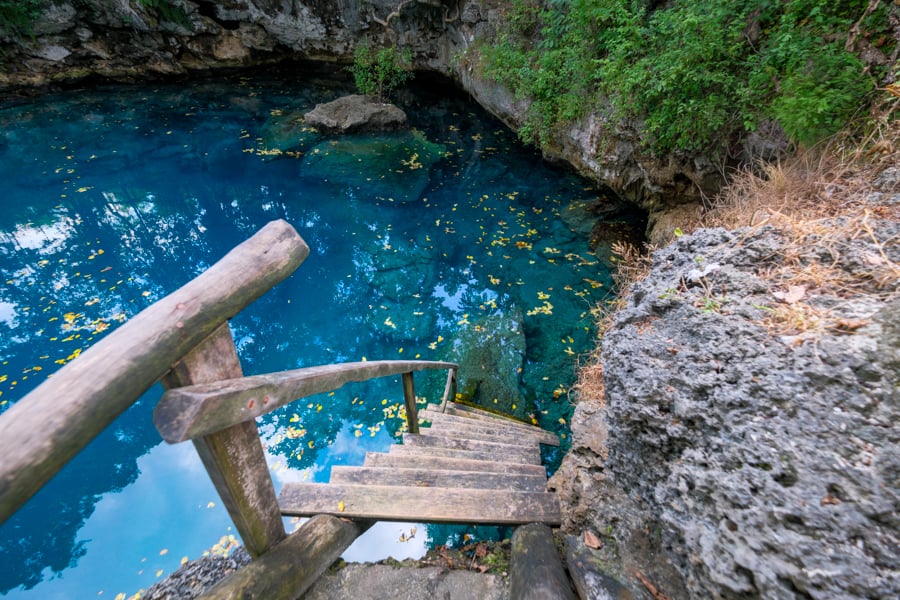
Ladders make it easy to get in the lake
The first Moko lake is the biggest, and the easiest to reach. It’s just 5 minutes off the main road, and there are plenty of parking spaces.
It’s a really nice lake, with bright blue water that’s great for cooling off on a hot day. There are some ladders for getting in and out of the lake.
There’s even a resident sea turtle you can swim with! He was apparently brought to the lake when he was young, which I don’t condone, but he has adapted and he’s semi-domesticated now.
He’s not afraid of humans, and he lives a fairly comfortable life in the lake. The locals said he’s lived there for a long time. Many years, in fact.
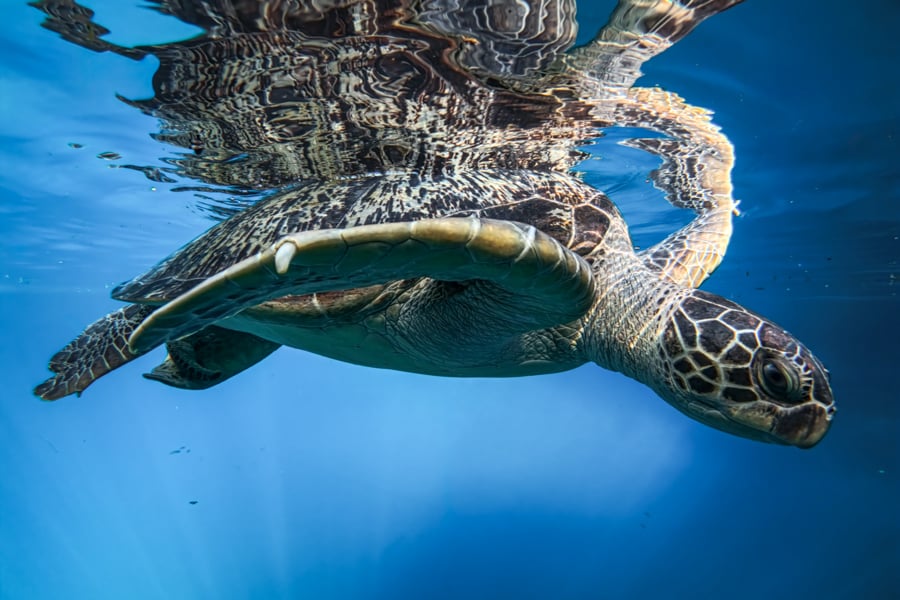
Sea turtle in the lake
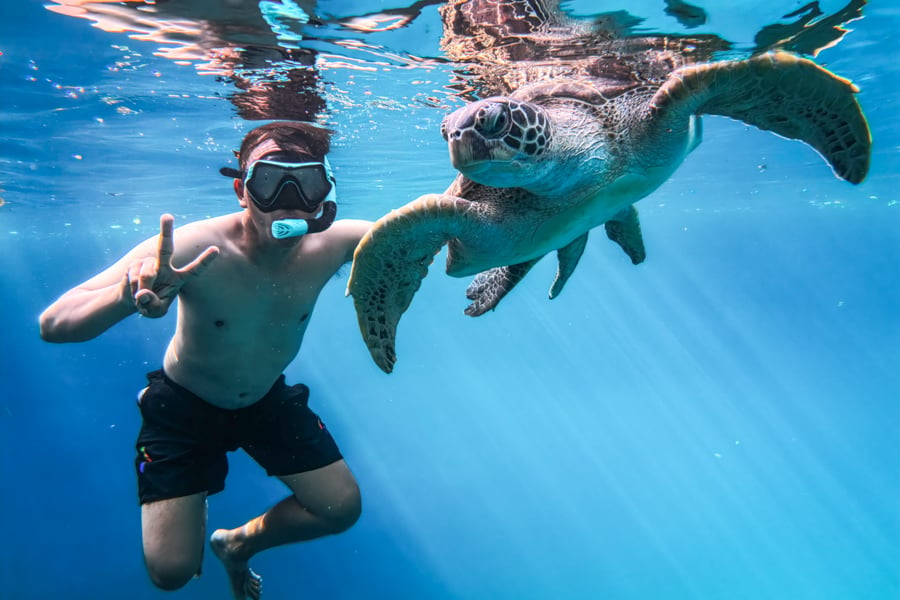
Our guide swimming with the sea turtle
Unfortunately, the ease of access to the first lake also makes it popular with the local young people, and a lot of them have thrown their trash carelessly on the ground around the lake.
We saw an annoying amount of bottles, wrappers, and other plastic trash around the lake, and even a little bit inside the lake. This should never be happening in such a nice place.
The good news is that the second Moko lake is a bit more secluded, and it’s more natural.
It’s just a 300 meter drive from the first lake, but we didn’t see any people there, and almost no trash either.
There weren’t any ladders into the water, but there’s a rocky path that gives easy access if you want to go for a swim.
Aside from that, it was almost totally undeveloped, which is great.
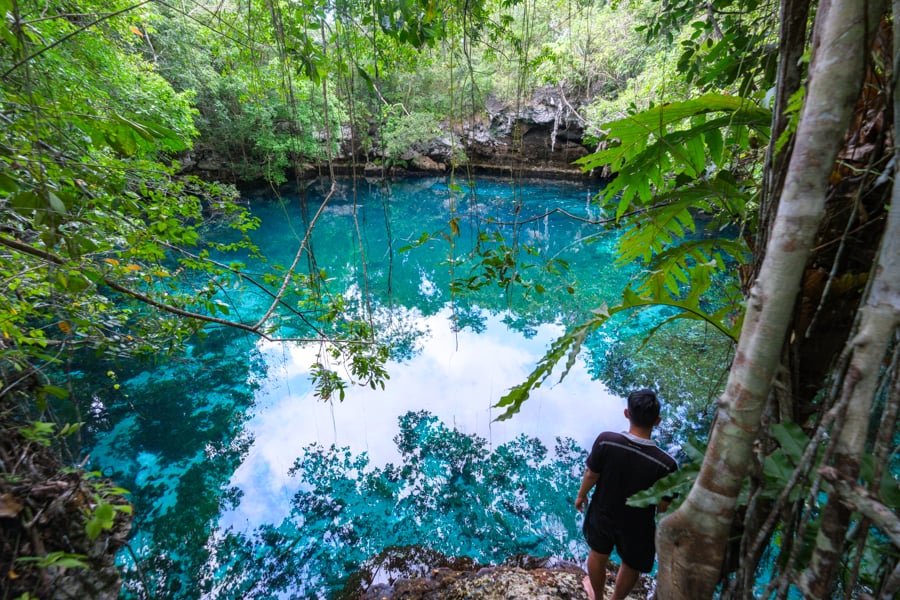
Moko Lake #2
The third Moko lake is similar to the second one, but bigger. It’s secluded and surrounded by jungle.
You can reach it in just 5 minutes of driving from the first lake.
Again, we didn’t see any people at this lake and it was pristine. The water is so blue!
There’s a rocky path that leads to the water’s edge if you want to swim.
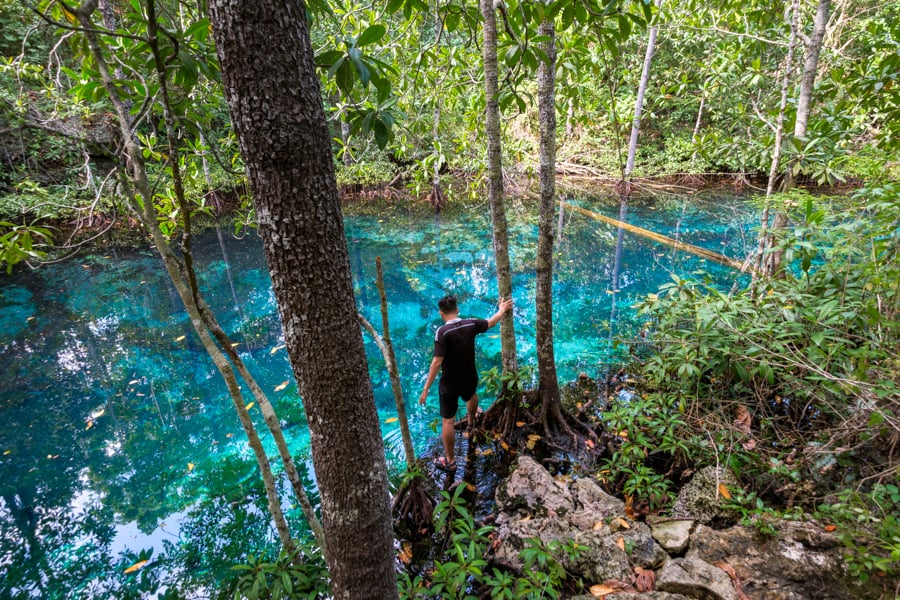
Moko Lake #3
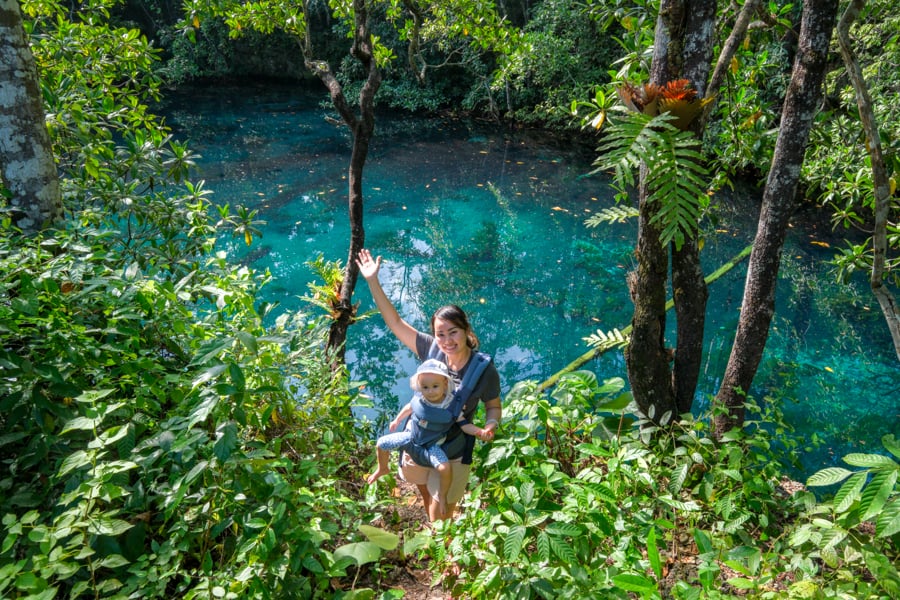
This lake is still natural
One of the top things to do in Muna is the boat trip at Napabale, which allows you to see several nice lakes, including the jellyfish lake.
This trip starts from a lagoon that at first looks totally surrounded by rocks, but there’s actually a small tunnel that’s been worn away by the tide, and you can exit through it, boat and all!
We went when the tide was low, otherwise I’m not sure if this is even possible.
Remember to watch your head, because the tunnel is incredibly narrow. You might even have to lie down to keep from bumping your head.
The boat guy will slow his engine and paddle through the tunnel, and it only takes a few minutes.
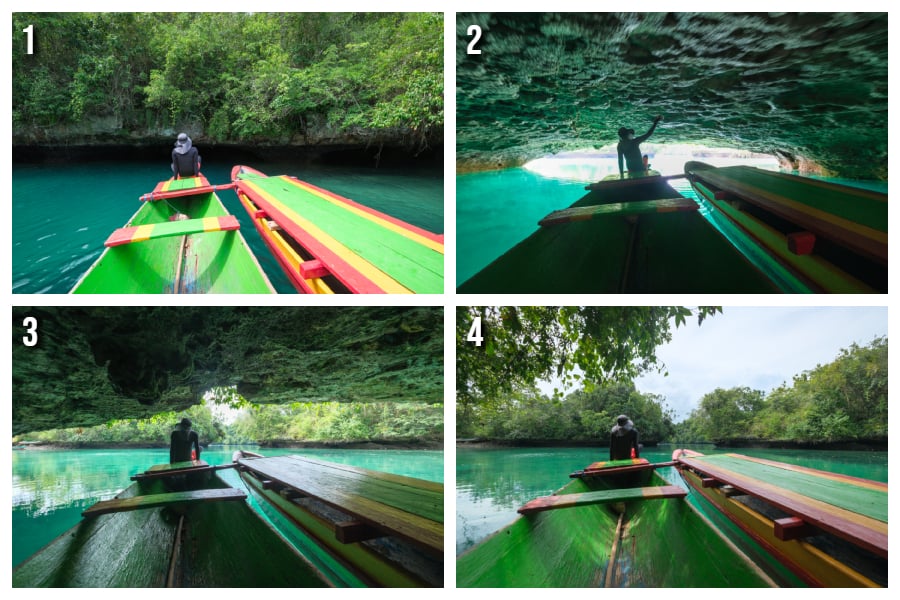
Once you pass through the tunnel, you’re now in the second Napabale lake.
The boat guy will cross from here to the open ocean, and then to a third lake called Liwu Wandala Lake. The whole boat ride is very tame and only takes about 30 minutes.
This third lake is incredibly nice, with bright turquoise water. It looks like Raja Ampat.
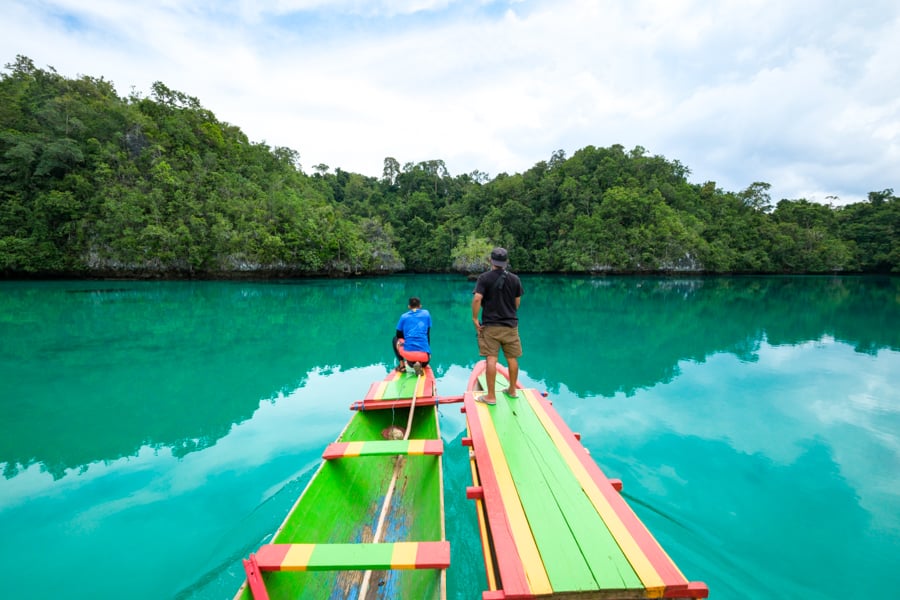
Liwu Wandala lake
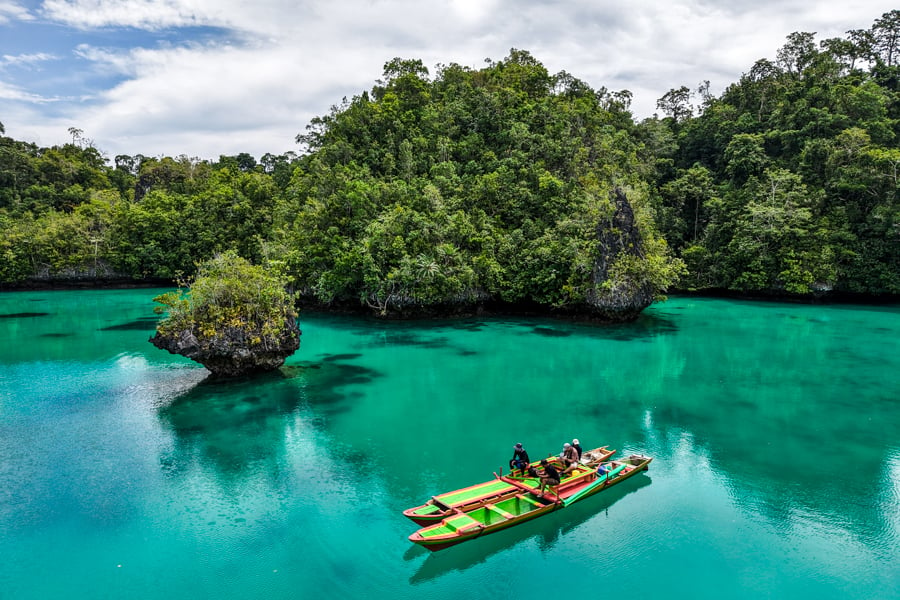
Drone pic of our boat
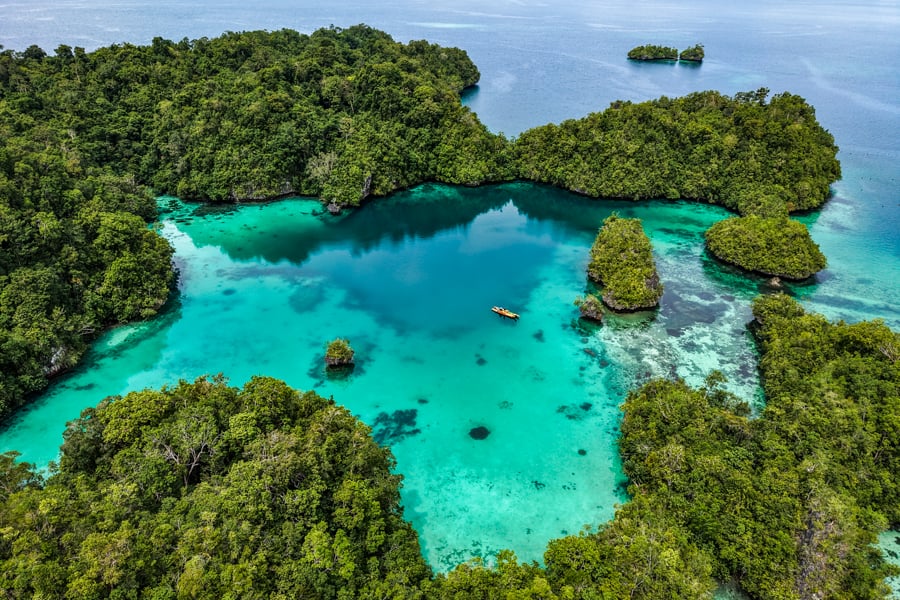
The lake from above
From here, you’ll need to go ashore to trek to the jellyfish lake, which is surrounded by karsts and jungle on all sides.
There are multiple routes to the lake, but the one we used took about 15 minutes of hiking. It was steep at times, but never dangerous.
The lake has two different species of jellyfish. There are thousands of them, but they’re stingless and completely harmless, so you can safely swim with them. It’s amazing!
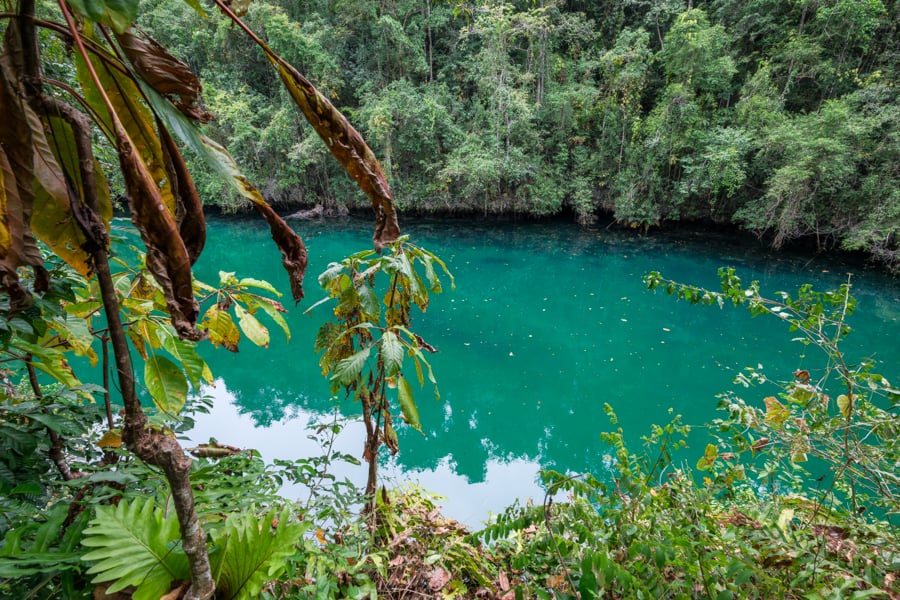
The lake is surrounded by steep walls
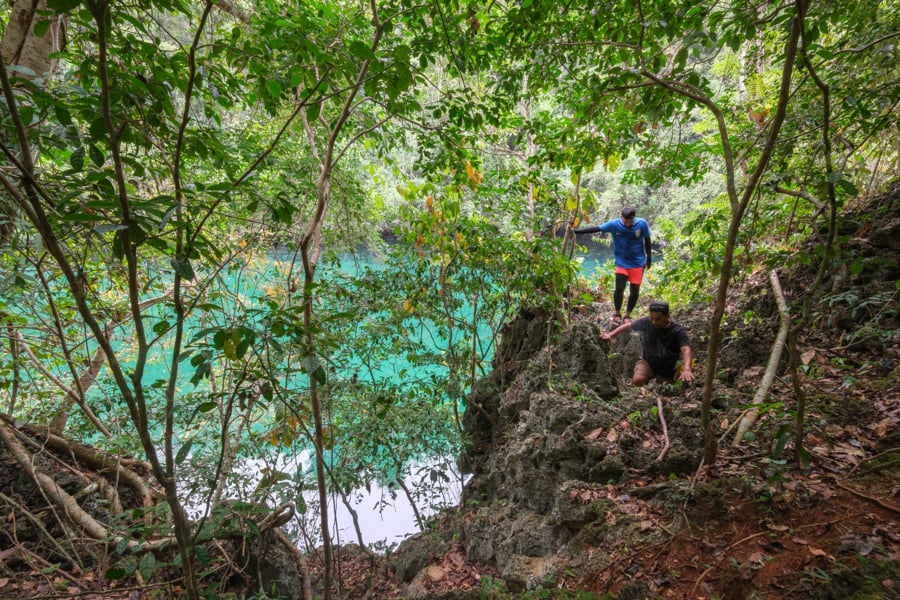
Finding a path down to the lake
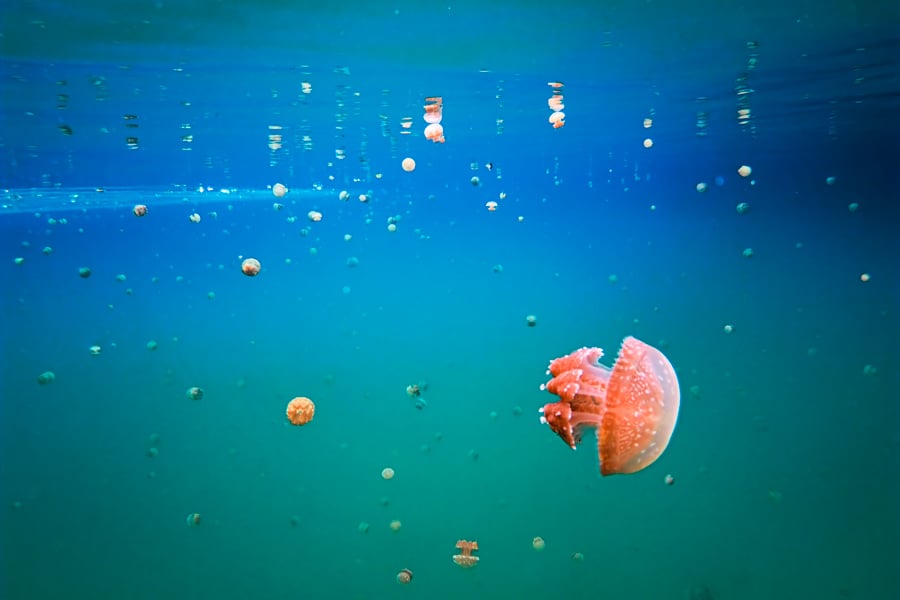
Swimming with jellyfish
Another thing you have to see in Muna is the prehistoric cave art.
There’s an entire complex of karsts and caves in the northern part of the island, but the best two caves to see are Liang Metanduno and Liang Kabori.
They’re just a short distance from the parking area, so you can reach Metanduno in 5 minutes of walking, and Kabori in 10 minutes.
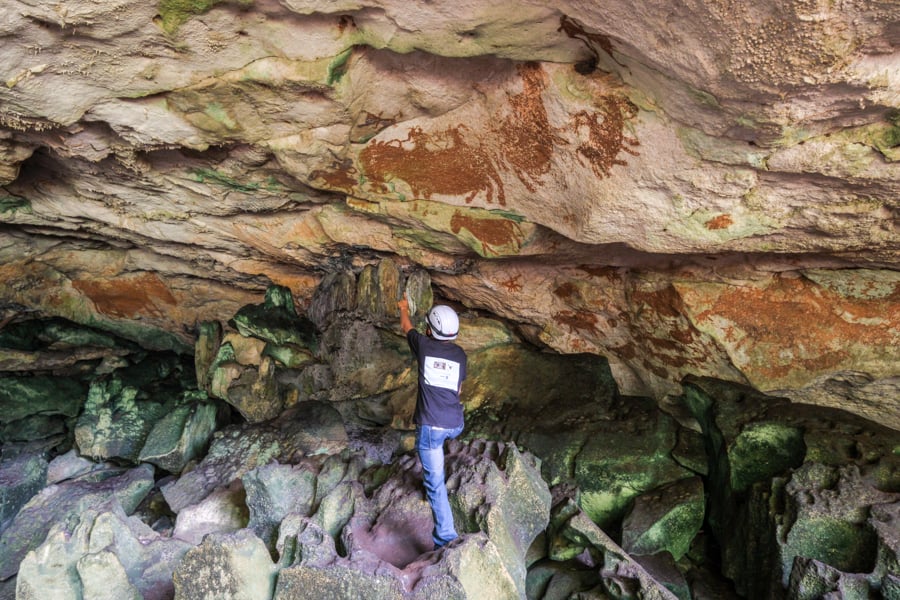
Metanduno cave
A hand stencil in Metanduno cave was recently identified by researchers as the oldest known human art in the world. It’s believed to be at least 67,800 years old.
There’s lots of prehistoric cave art in other parts of Sulawesi, like Leang Leang, Rammang Rammang, and Sombori, but this is the oldest discovery so far, which is pretty fascinating.
Aside from the hand prints, they have lots of depictions of horses and other animals, although these aren’t quite as old.
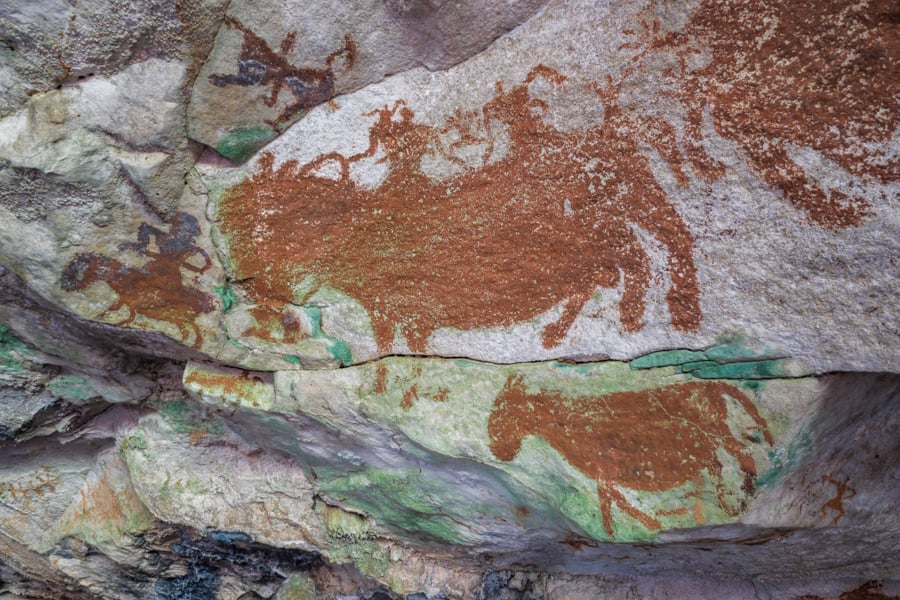
Prehistoric art
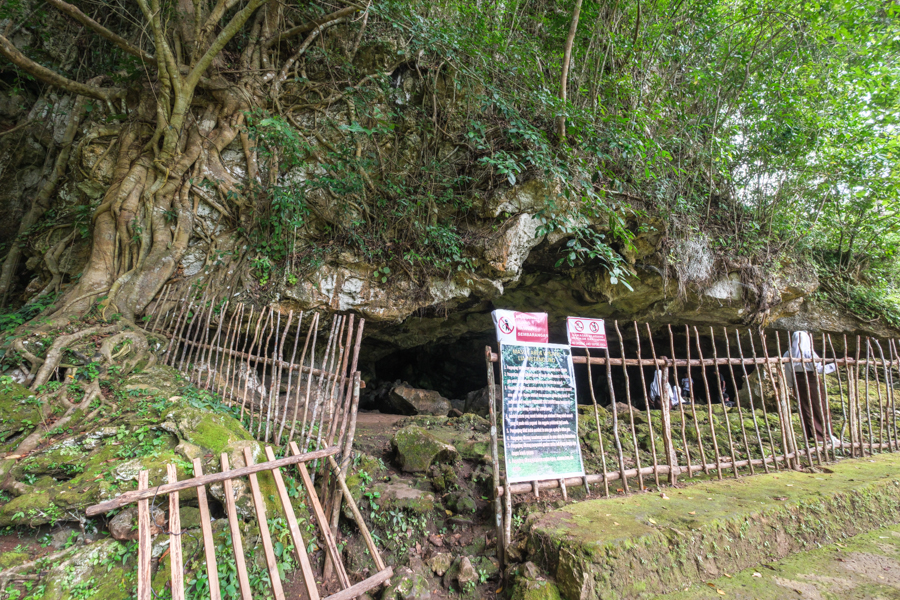
Entrance to the first cave
This is a natural pool in central Muna where the locals like to swim. It has nice clear water, and the pool is surrounded by giant trees.
Unfortunately this place was too crowded and littered to be anything special. There were so many pieces of plastic trash all over the parking lot and even some in the water! It was sad to see. It desperately needs a cleanup.
It still doesn’t hurt to stop here and take a look. You’ll probably be driving past Wakumoro anyway at some point during your trip, so you might as well check it out. The pool is nice.
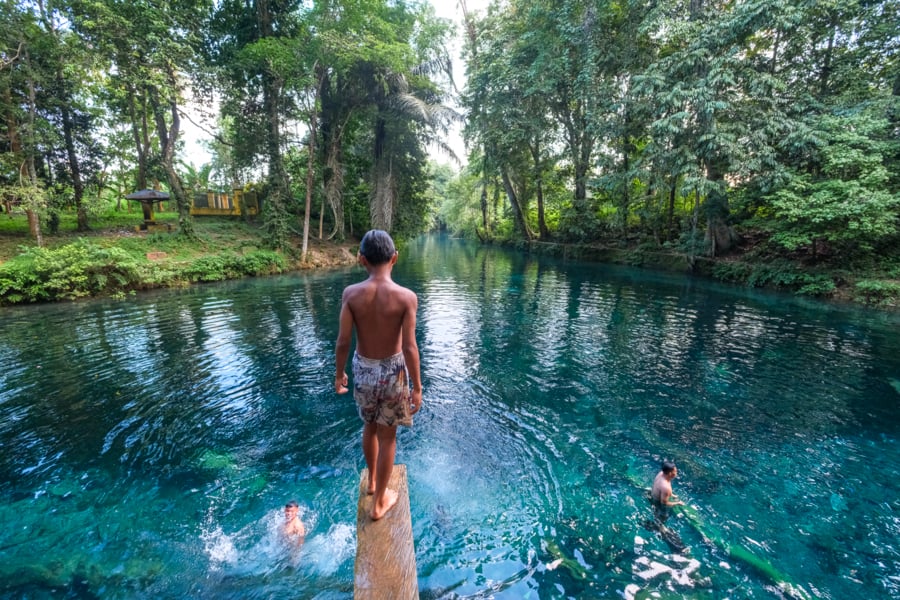
Wakumoro pool
Koo cave (pronounced Ko’o) is a giant cave with two blue pools at the bottom.
The first view of the pools is amazing, with jungle and stalactites on all sides, and it can be reached in just 5 or 10 minutes using a metal stairway.
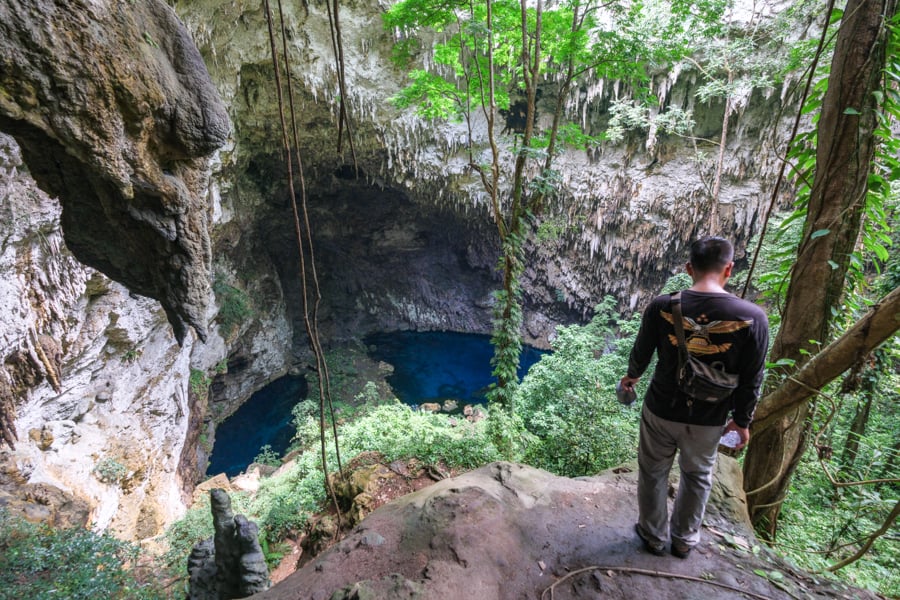
Looking at the two lakes from above
From here, you can hike down to the bottom of the cave in another 15 minutes, but there’s lots of awkward and slippery footing, so be careful.
I think each of us slipped and fell at least once on the way down, getting our clothes muddy in the process.
It’s still worth going to the bottom of the cave, though, because you have to see the blue pool up close. It’s incredibly blue!
We were lucky to have the sun shining into the cave when we were there in the morning, because the sunlight really brings out the color of the water.
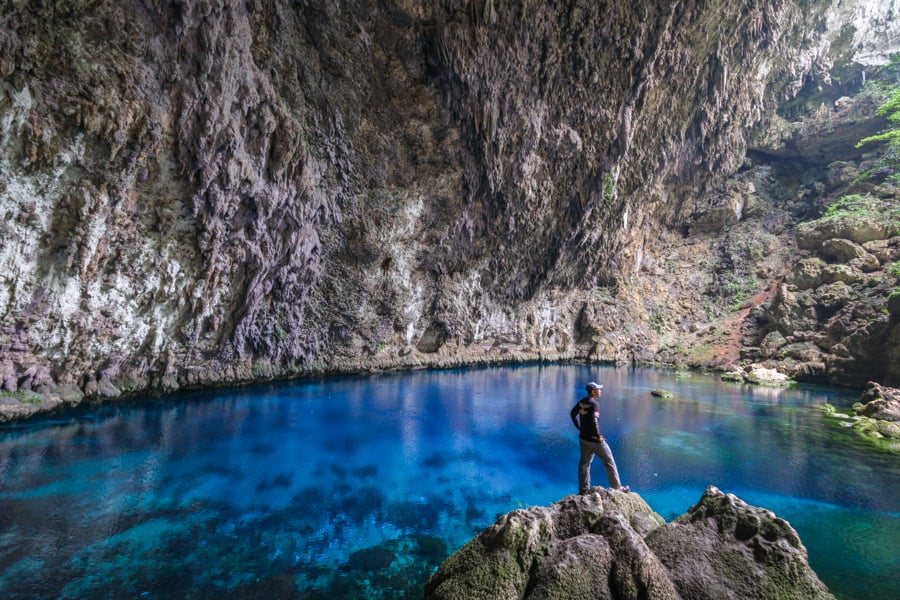
The main pool
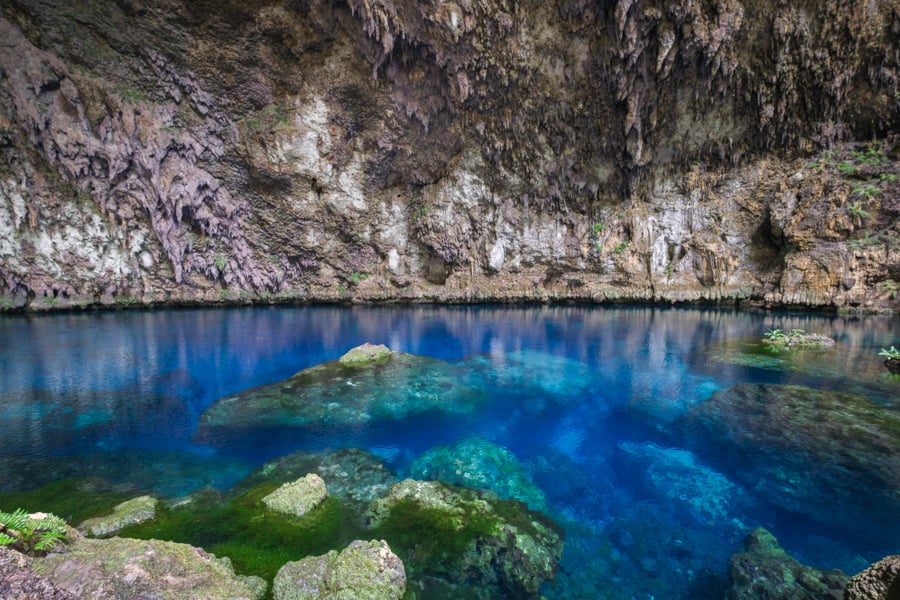
It’s so blue
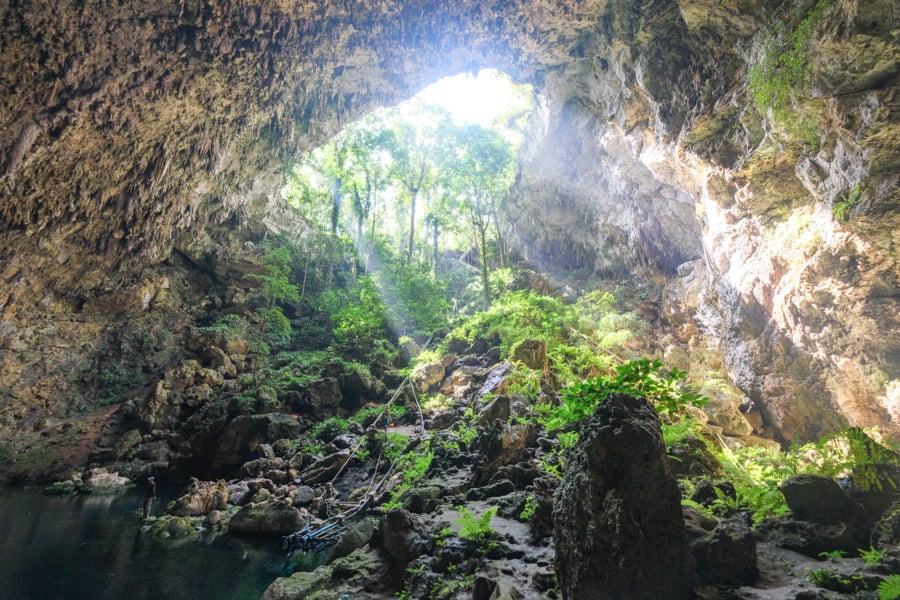
At the bottom of the cave
This is a deep cave in south Muna that’s full of impressive stalactites.
It’s pretty easy to reach the mouth of the cave with a 10 minute walk from the parking area, and then there’s a convenient metal walkway with stairs leading down into the cave.
They supply helmets in case you bump your head on the ceiling, which you probably will a few times, like I did.
It took us about half an hour to each the end of the cave, aside from the time we spent taking photos, and the whole journey was spectacular. Don’t miss it.
The walkway doesn’t actually reach the end of the cave. It goes on and on!
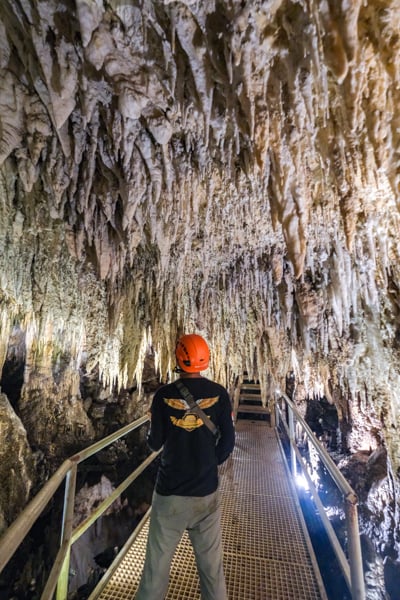
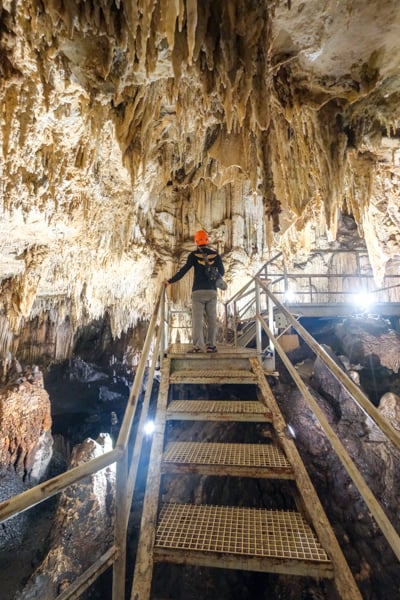
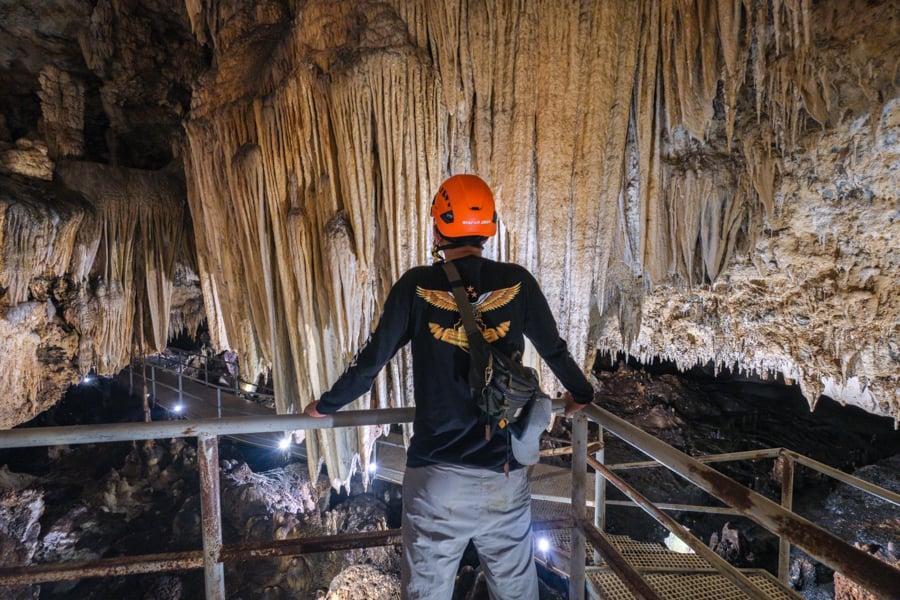
Laumehe cave
This is an interesting cave that’s close to the road in south Buton.
You can reach it in just 5 minutes of walking, although the path down into the cave is a bit rocky.
Inside, there are several pools of clear water, and an open ceiling that pours sunlight into the cave. It’s cool.
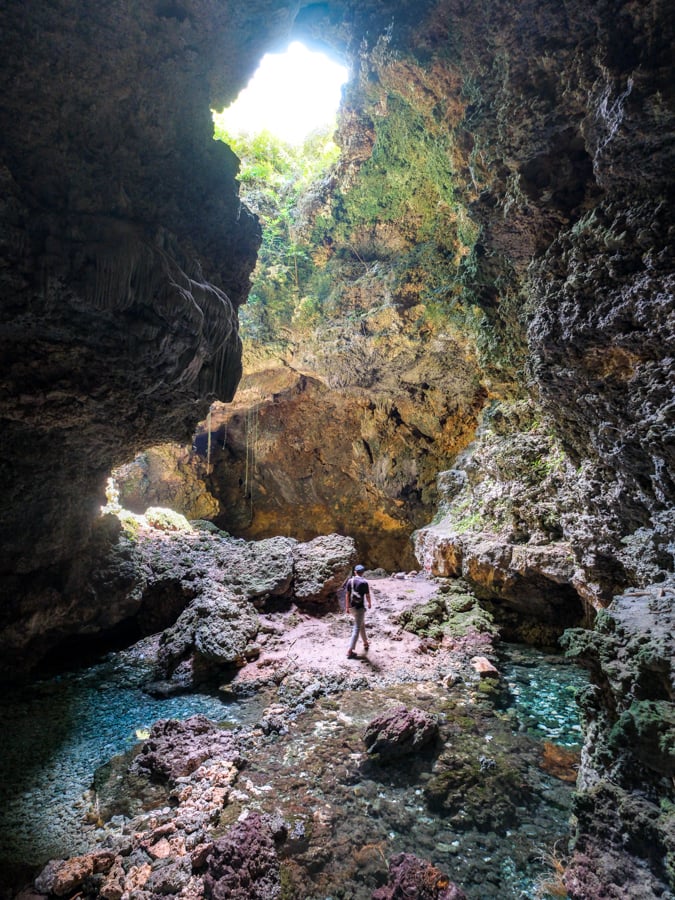
Bidadari cave
There are still a lot of hidden gems and new places being discovered on Muna island.
We planned to go to some of these ourselves, but we ran out of time on this trip.
Here are some extra places I hope to visit in Muna next time I’m there:
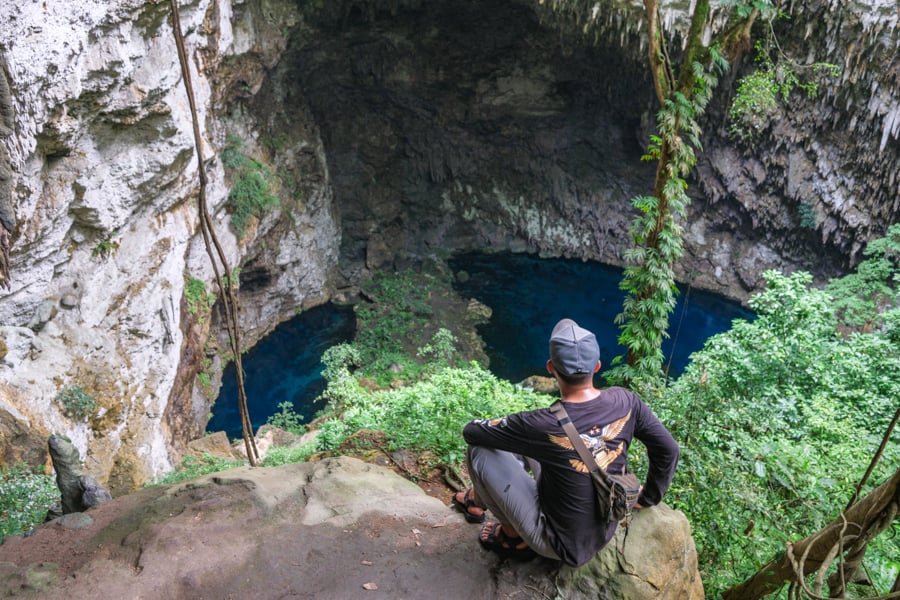
Above Koo cave
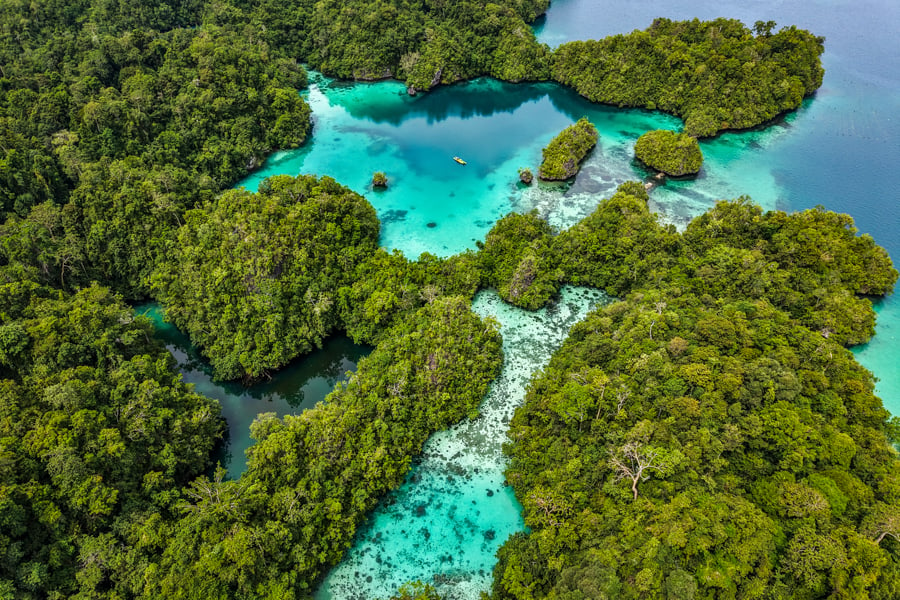
Lakes & lagoons at Liwu Wandala
Most people visit Muna in conjunction with its neighboring island, Buton.
If you’re planning a trip to Muna, then you’ve probably already heard about Buton as well, since most flights go through there.
Buton has great waterfalls, caves, and exotic beaches. I wrote a separate guide for it, which you can read in the link below.
Read More: Buton Island Travel Guide
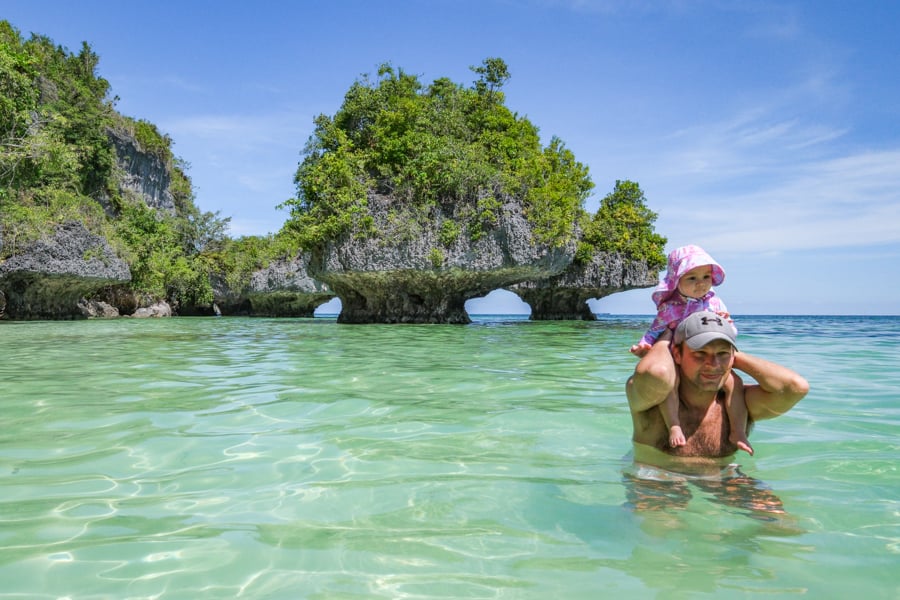
Swimming at Bahari beach in Buton
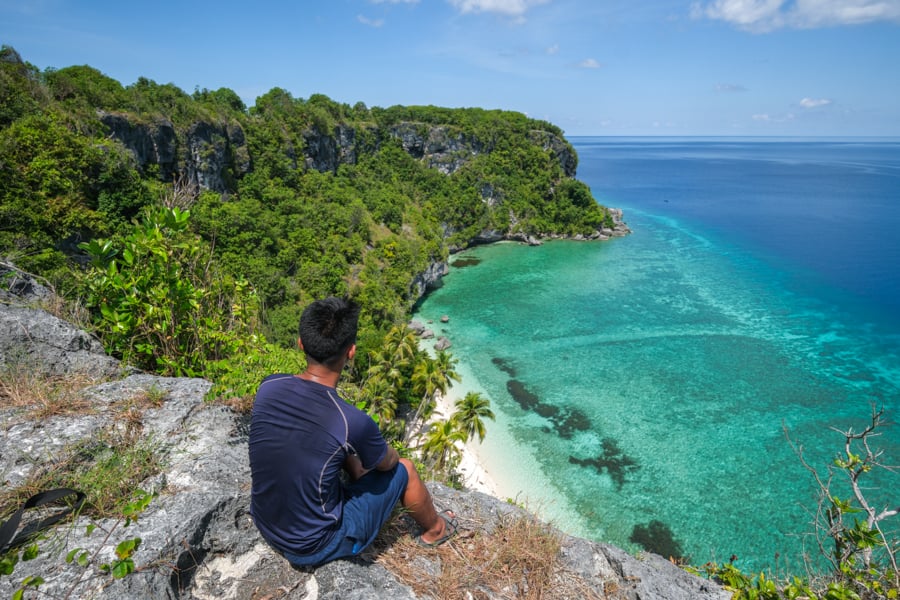
Cliff view at Napang Sangia in Buton
Here’s an interactive map of the main sights on Buton and Muna islands. You can use this to plan your trip.
The blue icons on the map are things you can see by driving, and the purple icons are things to see by boat.
Here’s a sample 9-day itinerary you can use for your trip to Buton and Muna.
This matches our own itinerary pretty closely, with a few tweaks and improvements based on our experience:
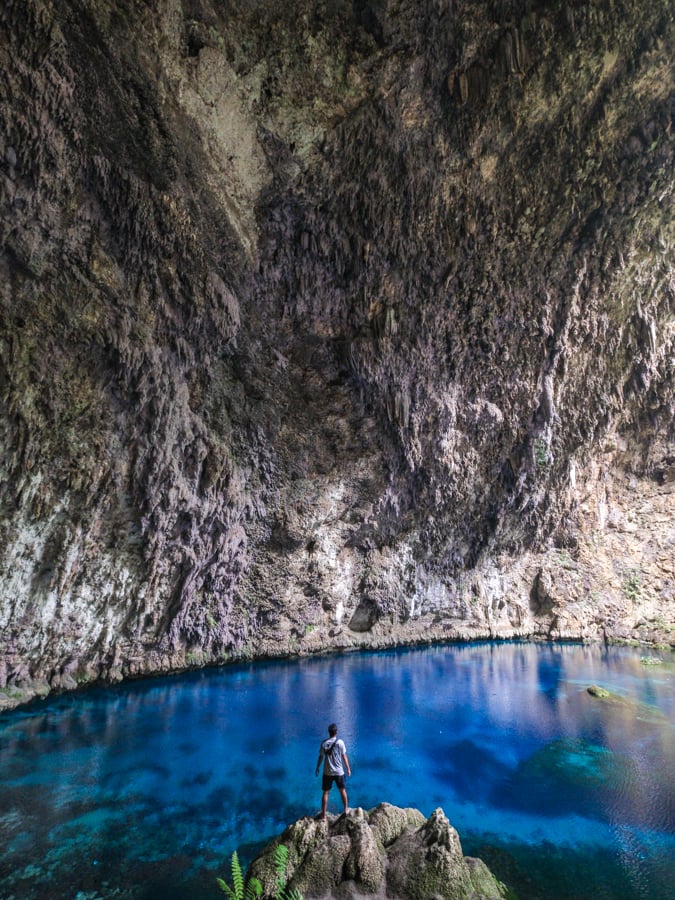
Blue pool at Koo cave
Here are some useful contacts for your trip to Buton and Muna. I can recommend all of these people from my own personal experience:
Once we got to Buton, Aspin arranged drivers, boat tours, and other activities for us based on what I wanted to see and do. You can contact him by WhatsApp at ☎ +62 823-7286-6231 or on his Facebook page.
Unfortunately, he was busy traveling in Sumatra when we came to Buton, so we weren’t able to line up our schedules, but that wasn’t his fault. His company is high rated and he was a helpful contact, so I’d happily recommend him for a trip to Buton and Muna. You can contact him by WhatsApp at ☎ +62 821-9590-1528, or on his company’s Facebook page.
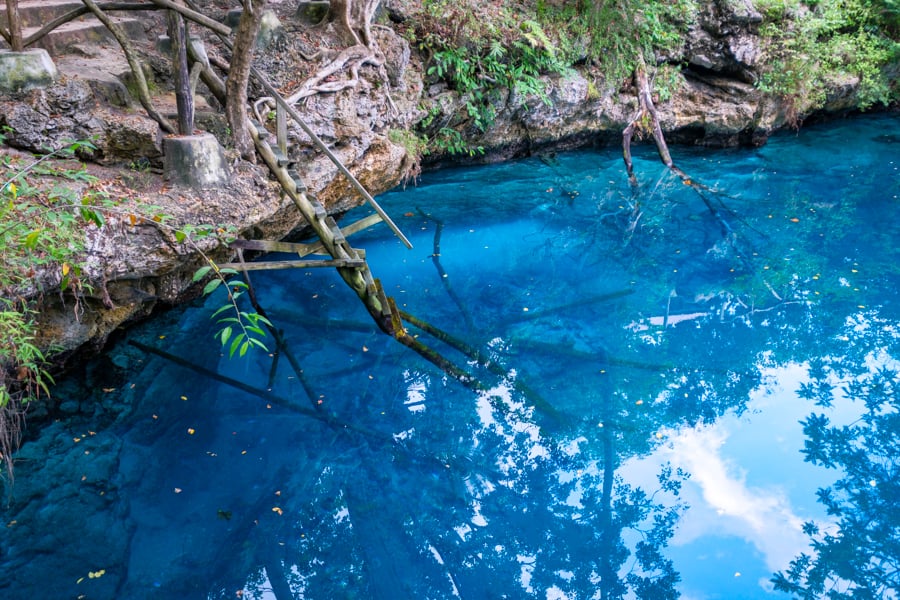
Moko lake
Most of the accommodation in Muna is in Raha town, on the north end of the island.
Here are some recommended places to stay:
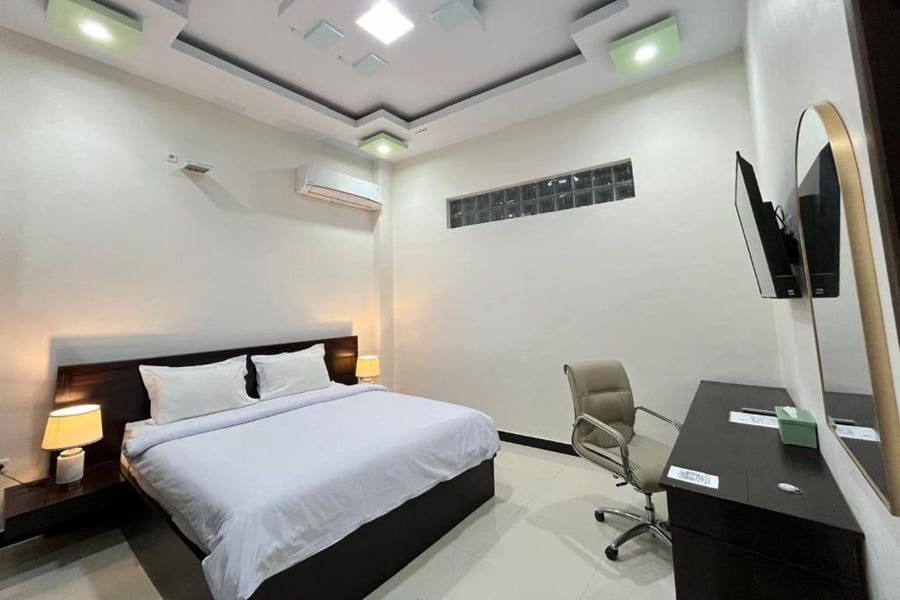
© DJ Hotel in Raha
 PHPTRAVELS v8