
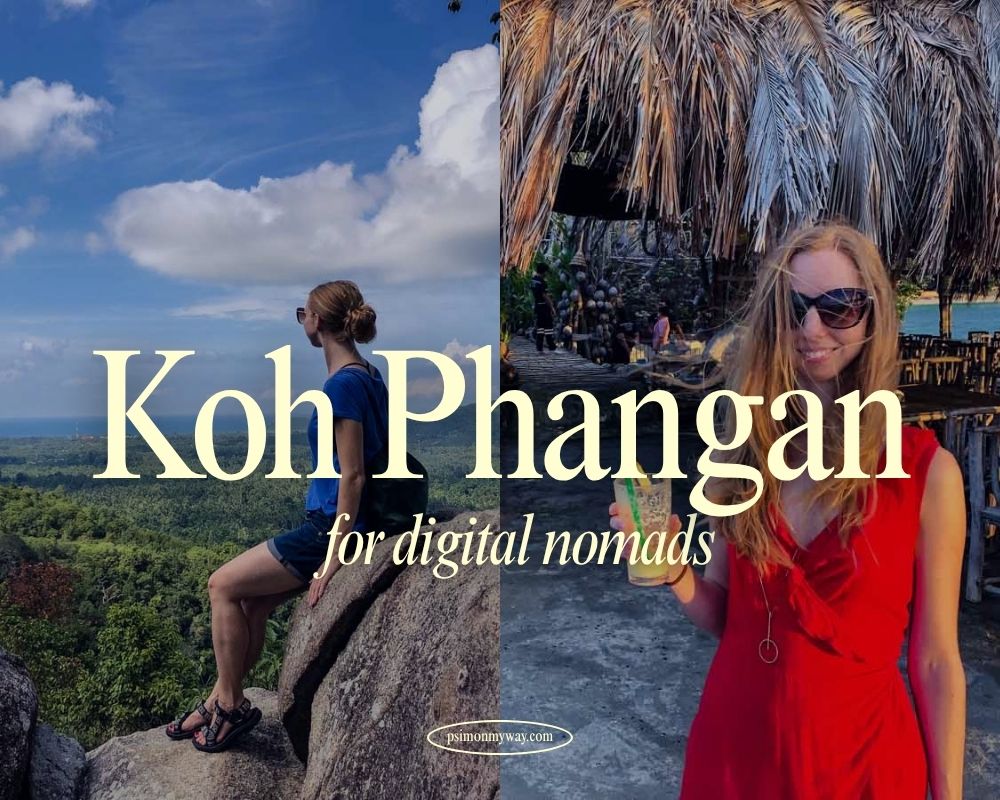
Veronika is a Koh Phangan digital nomad, and in this post, she shares all her personal experiences not only on being a Koh Phangan digital nomad but also living in Thailand.
Hi Trisha! I’ve been following you since your first travel years in Thailand. You were so young but I was sure you were already a digital nomad then. I am planning to move to Thailand this year. I was thinking Chiang Mai but what do you think about Kho Phangan digital nomad? Is it a place where I can meet other nomads? Thank you so much for all your help!
– June, USA
Hi June!
Thank you so much for reaching out! Yes, I have been a digital nomad for 10 years but I, unfortunately, did not stay long in Koh Phangan to make a post. Meaning, I am not so much of an authority in the area.
That said, I called some reinforcements. Veronica is a fellow digital nomad and she will share her experiences about being a Koh Phangan digital nomad. Feel free to reach out to her or me if you have additional questions!
Now I give the floor to Veronica. Good luck, June!
Xx, Trisha
? If you’re still skeptical about Koh Phangan, good. Doubt keeps you honest. But without a plan, you’ll stay stuck. Book a consult call and let’s figure it out!
BOOK A 1-1 COACHING →
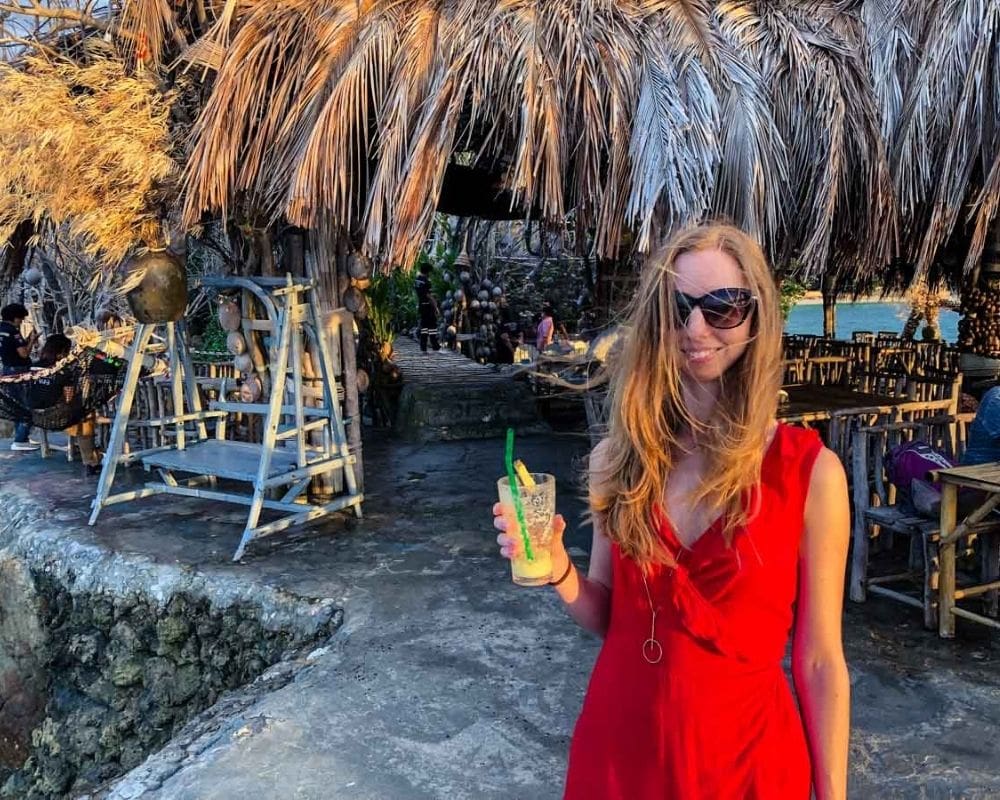
My name is Veronica and I’m from the Czech Republic – an awesome little country in the heart of Europe. I love living there, but less so in winter, since winters often get long and bleak. That’s why my husband and I escaped to Thailand for the past winter and spent 6 months in Koh Phangan.
I work online and even though my main job is not fully remote, I turned it into a remote one after an agreement with my boss. I work as a social media manager and apart from my main job I also have a few other projects including my travel blog Travel Geekery.
We tested the waters a year before moving to Koh Phangan for half a year. We knew about the island from a friend who called it home for a few years. At the end of one particularly long and grey autumn, we went to Koh Phangan for a month to see how it feels.
We loved it and decided to come back in a year for the full winter. Even though Koh Phangan is a relatively remote island, the internet is easy to get, all cafés and restaurants have wifi and in most cases, it’s fast and reliable.
Apparently, the whole island uses fiber optic cables. Power outages are rare and last a few hours at maximum, and that’s only during the heaviest rains in the rainy season. Mobile signal is great and unless you’re trekking in a jungle, you can be connected anywhere.
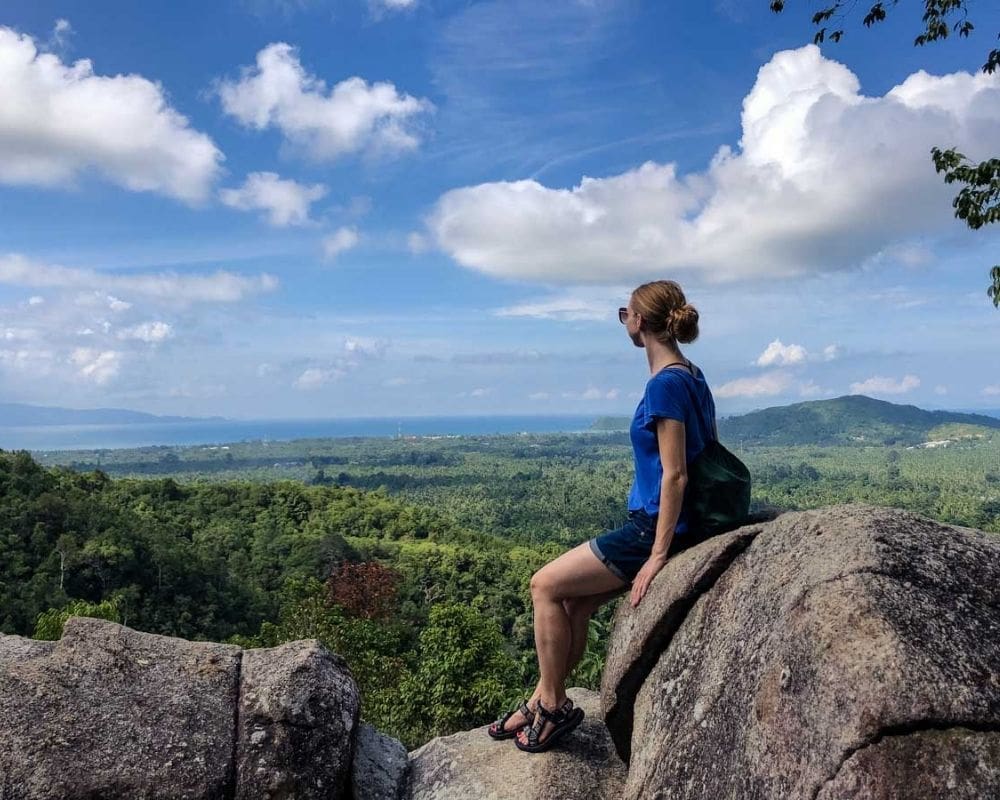
Daily sunset jam in Koh Phangan, Thailand What’s more, despite its rather small size, the island offers all possible amenities one could wish for. It’s beautifully green with forests and jungles, some of them with trekking trails. The beaches are lovely and mostly public.
There’s a thriving yoga & vegan scene and vegans don’t have any problem finding a meal at any roadside stall. Many cool events and festivals happen every week and it’s easy to meet other people. There are just so many diverse things to do in Koh Phangan!
I’d describe the Koh Phangan digital nomad community as vibrant. There’s plenty of coworking spaces, many cafés are work-friendly, and digital nomads often easily outnumber regular tourists in said cafés.
Usual work setting in Koh Phangan, Thailand Expats or visitors connect usually either over yoga or working. Many groups on Facebook cater to the digital nomad crowd and it’s easy to find other like-minded travelers.
The best group is called Koh Phangan Conscious Community – they even organize a once-a-week work-together for digital nomads in a chosen café, restaurant, or a coworking space.
Often they even manage to get a special perk, such as free access to a resort’s pool. After a work session, everyone has dinner together, some even hang out later in the night.
Overall, it’s very easy to meet other digital nomads, since everybody is open and welcoming.
As a Koh Phangan digital nomad, you can expect reliable internet for remote work, especially in coworking spaces and select cafés. Testing WiFi before committing to housing is the best way to avoid surprises.
Average home connections run at 59 Mbps download and 29 Mbps upload, while cafés and coworking spaces often reach 50–150 Mbps, making video calls and remote work reliable
One doesn’t necessarily need a sim card if staying at a place with wifi since all restaurants and cafés have wifi too. I do need to be online pretty much all the time, so I kept a “Happy Tourist” sim card, which I purchased at Bangkok Airport.
Any 7-11 or Familymart shop sells tourist sim cards, so they’re easy to find. When you need to top up the balance on your sim card, you can either use one of the ATM-like machines (again, by any 7-11 or Familymart, or a bigger store like Tesco), but I found them a bit hard to work with.
The Happy Tourist sim card I used on my trips to Koh Phangan, and other places in Thailand previously, falls under the DTAC operator. This one has good coverage on the island.
Also, the top-ups and refills are made a lot easier through a mobile app (called dtac), which is available in English too. But again, wifi speed is generally good anywhere, so you can rely just on that.
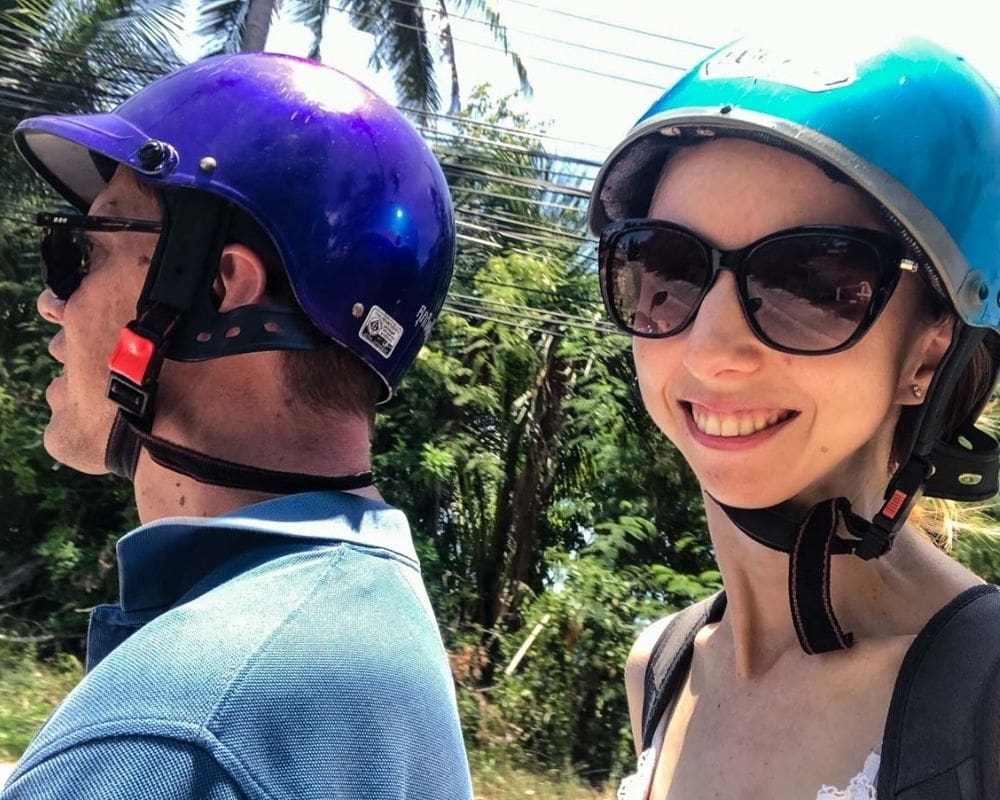
While Thailand’s cost of living for digital nomads is relatively low, there’s a big difference between the North (e.g. Chiang Mai) and the islands in the South, such as Koh Phangan.
We stayed at a 2-bedroom house, ate out most of the time, and kept ourselves caffeinated well during the day at our favorite work-friendly cafés. We didn’t pay for any coworking spaces since our house provided a great work environment.
We rented one scooter and used it on a daily basis. Because that’s basically the only way to get around the island, you need to factor a scooter rental + gas into the budget.
It’s good if you stay at a place where you can walk to a shop or a beach, to change it up a little.
In total, we spent about $2,000/month as a couple. It’s easy to stick to the budget, but you can’t eat at foreign-owned restaurants every day, because the food is pricier.
We often ate at the Phantip Market in Thong Sala, where there’s plenty of different food options.
Here’s a sample cost of living in Kho Phangan for digital nomads:
| Category | Estimated Cost | Notes |
|---|---|---|
| Housing | $700 | 1-bedroom central apartment; outside center ~$550 |
| Groceries | $320 | Cooking ~50% of meals at home |
| Dining Out | $280 | ~12 meals out per month; local Thai meals $3–$6 |
| Utilities + Internet | $130 | Electricity, water, 100 Mbps internet |
| Coworking | $200 | Monthly hot-desk membership |
| Transport | $50 | Scooter rental or monthly pass |
| Leisure & Fitness | $200 | Yoga, gym, occasional tours |
| Miscellaneous | $120 | SIM card, household items, small extras |
| Total (Two People) | $2,000 | Comfortable lifestyle with flexibility |
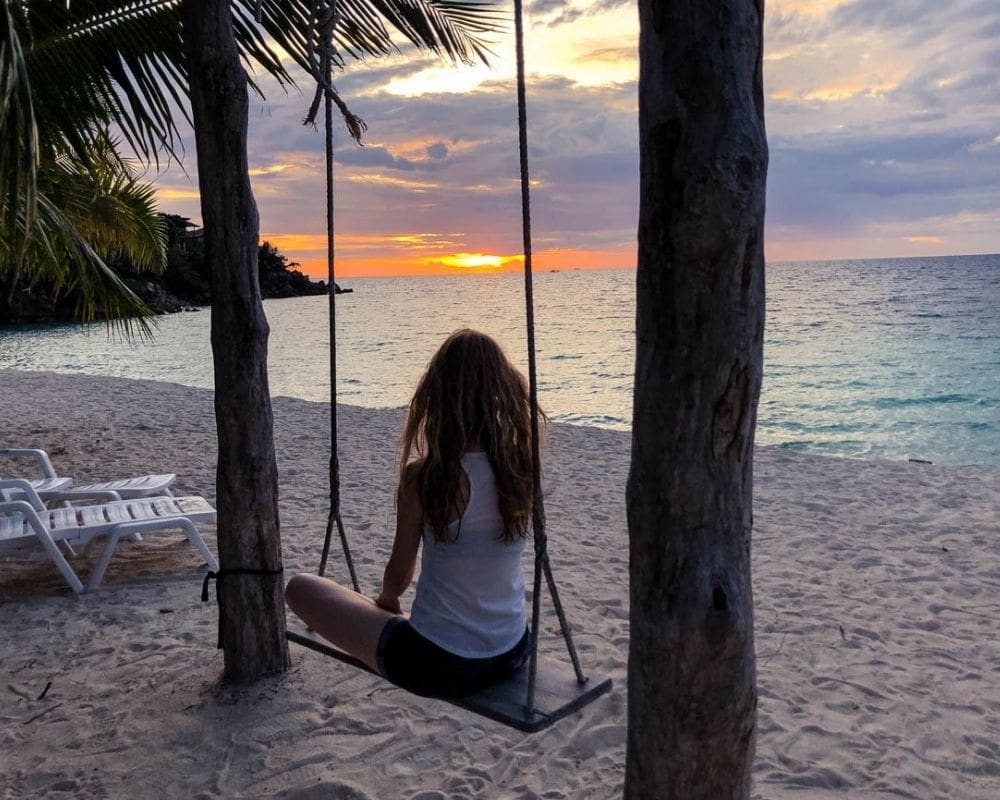
Finding housing in Koh Phangan as a digital nomad is a mix of online research and on-the-ground exploration. Start with Facebook groups like House for rent on Koh Phangan, Koh Phangan Properties rent and sell, and House for Rent on Koh Phangan
Locals and expats post daily listings, often cheaper than Airbnb. If you’re staying short-term, Airbnb or Booking.com works, but for longer stays, it’s best to arrive and scooter around.
Many guesthouses, bungalows, and villas don’t advertise online, and you’ll find “For Rent” signs tucked along jungle roads or near beaches. Popular nomad areas include Srithanu for its yoga vibe and community, and Thong Sala for convenience and coworking spaces.
Expect monthly rates to drop significantly if you negotiate directly with owners. Always check WiFi speed before committing, and ask about electricity costs, as air-conditioning can spike bills.
?️ VIEW KOH PHANGAN DIGITAL NOMAD HOUSING MAP →
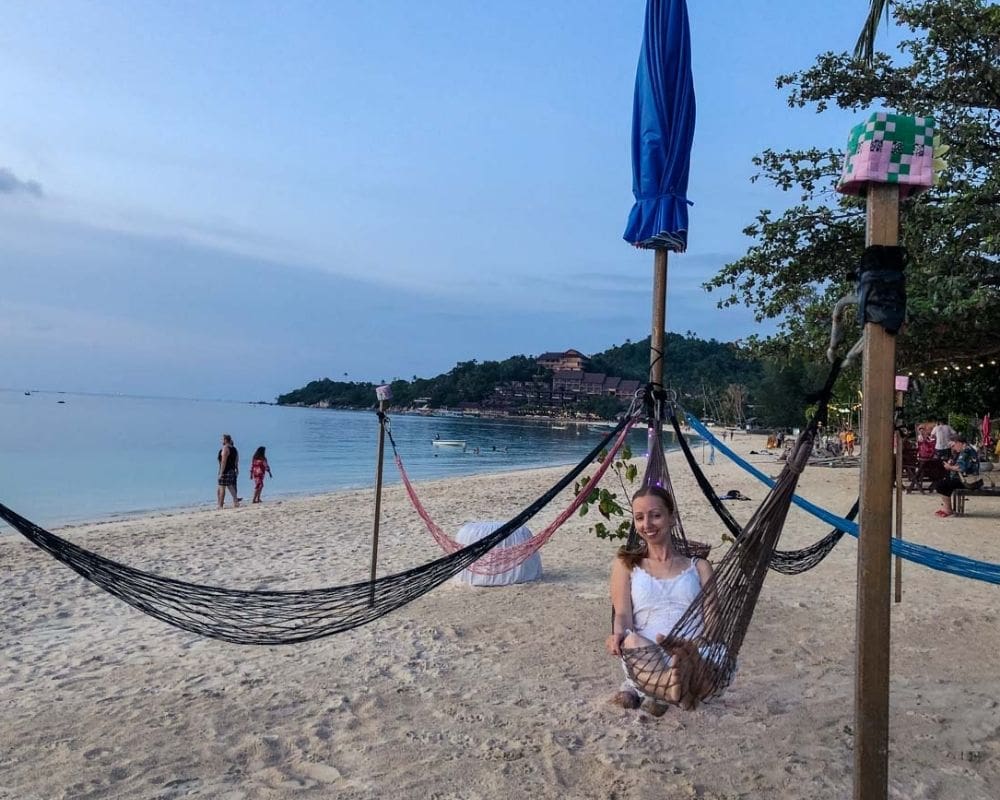
Living in Koh Phangan as a digital nomad taught me that neighborhoods shape the rhythm of island life. Each area carries its own energy.
Some buzzing with cafés and coworking, others quiet with beaches and sunsets. Choosing where to stay isn’t just about location; it’s about finding the lifestyle that fits your flow.
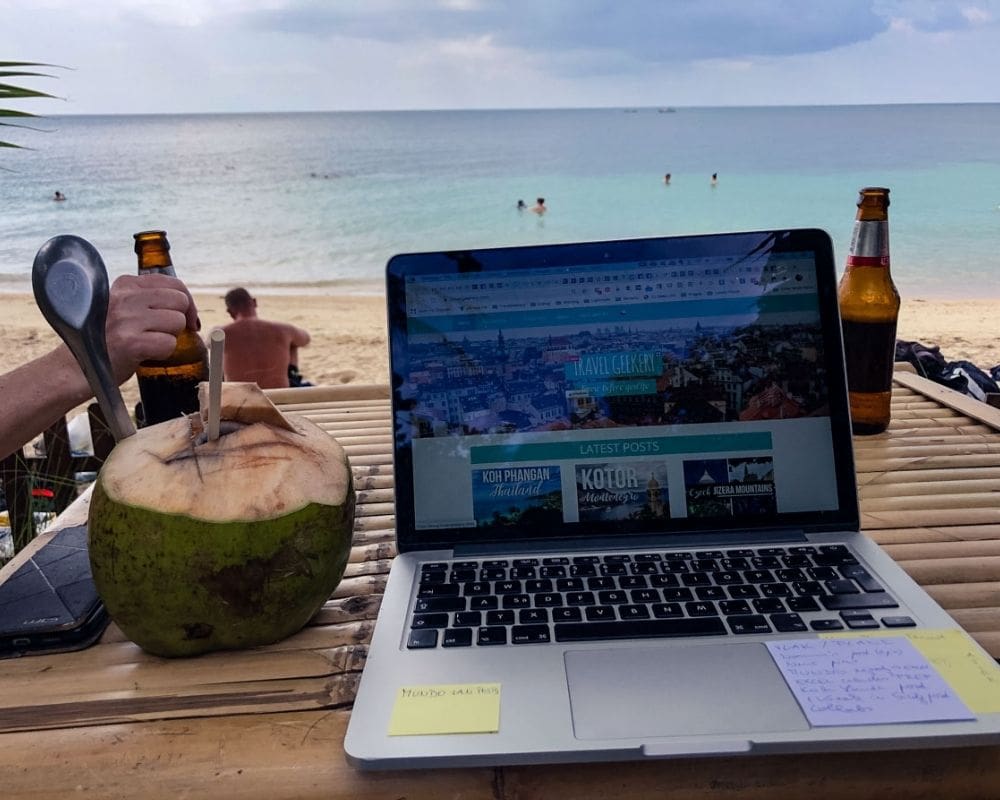
Cafes in Koh Phangan have become an extension of the island’s digital nomad culture — most welcome laptops, expect a small minimum spend (usually a coffee or smoothie), and provide solid WiFi.
The vibe is relaxed, with nomads working quietly for hours, often upstairs or in designated corners, while downstairs remains social.
Staff generally don’t mind long stays if you order something every few hours, and many cafes even design spaces with outlets and communal tables for this purpose.
Here are some of my favorite cafes in Kho Phangan:
The café culture in Kho Phangan is less about rushing and more about community and respect — order regularly, keep noise low, and you’ll find Koh Phangan’s cafés double as both office and social hub.
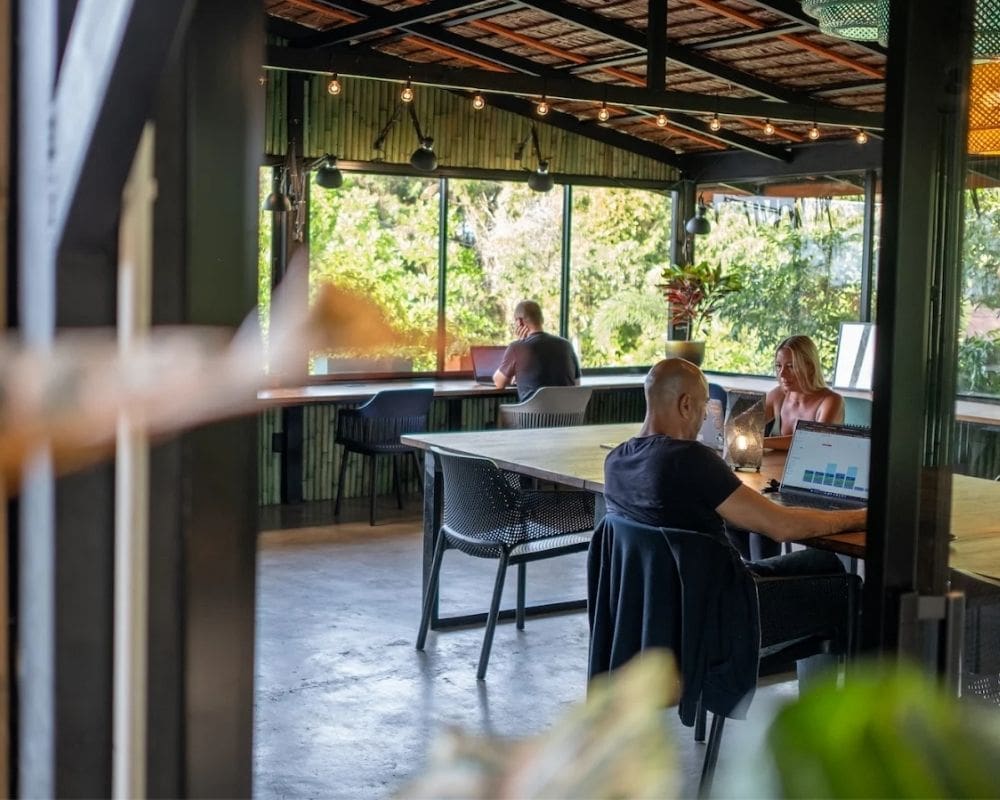
Coworking spaces in Koh Phangan are more than just desks and WiFi — they’re hubs of nomad culture. Forums often mention that the vibe is collaborative yet laid-back, with barefoot entrepreneurs mixing work with yoga breaks.
Day passes or monthly memberships usually include unlimited coffee, water, and community events.
The culture leans toward balance: work hard in the morning, then join sunset meetups or wellness workshops. Many spaces are designed with open-air layouts, sea views, and hammocks, making them feel less corporate and more like creative retreats.
Here are the co-working spaces I frequent in Kho Phangan:
The coworking scene here is less about hustle and more about community, balance, and lifestyle design.
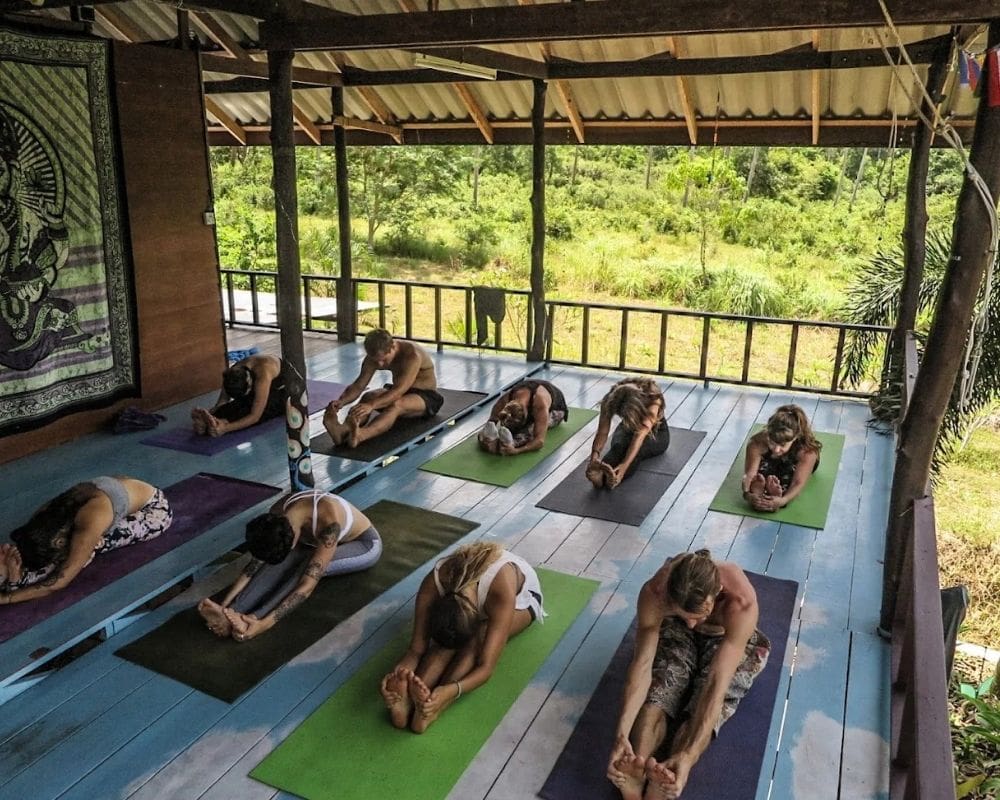
Koh Phangan’s wellness scene is deeply woven into digital nomad life. Think of it as a “barefoot professional” culture where workdays begin with yoga, afternoons include detox smoothies, and evenings end with sound healing or meditation.
The island has a unique balance of productivity paired with personal growth and community.
Retreat centers and yoga shalas foster authentic connections, not just workouts. Beyond yoga, expect breathwork, detox programs, plant medicine, and sound healing.
Classes range from $8–$15, retreats from $300/week — far cheaper than Bali or Koh Samui. We often structure our day around wellness — sunrise yoga, coworking, then sunset meditation.
Many digital nomads arrive for a week retreat and end up staying months, drawn by the supportive, mindful community. In Kho Phangan, you’ll find:
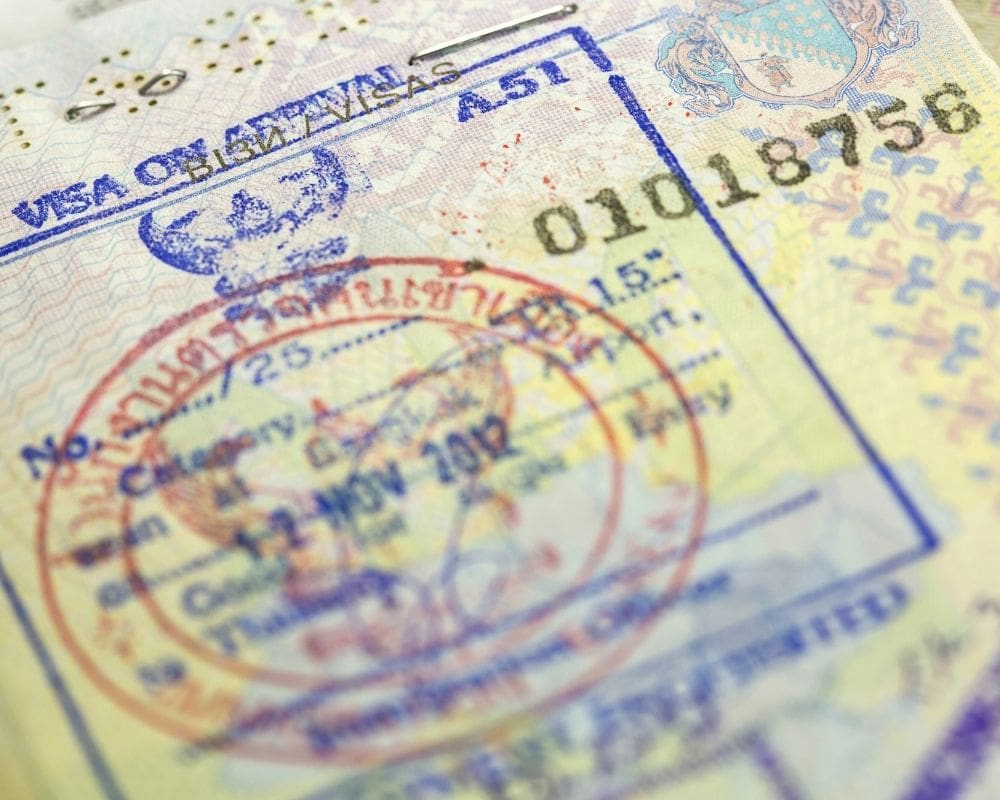
Most countries automatically receive a 30-day tourist visa upon arrival to Thailand (by air). That can be extended at an immigration office for another 30 days.
The closest immigration office is on the neighboring island of Koh Samui. Some people take visa runs after the 30 days to get another 30 days upon returning, but this practice is looked down upon by the authorities and the more such stamps you get this way, the more of a red flag.
Thailand offers also a 2-month and a 6-month tourist visa, which you need to apply for at a Thai Embassy in your country.
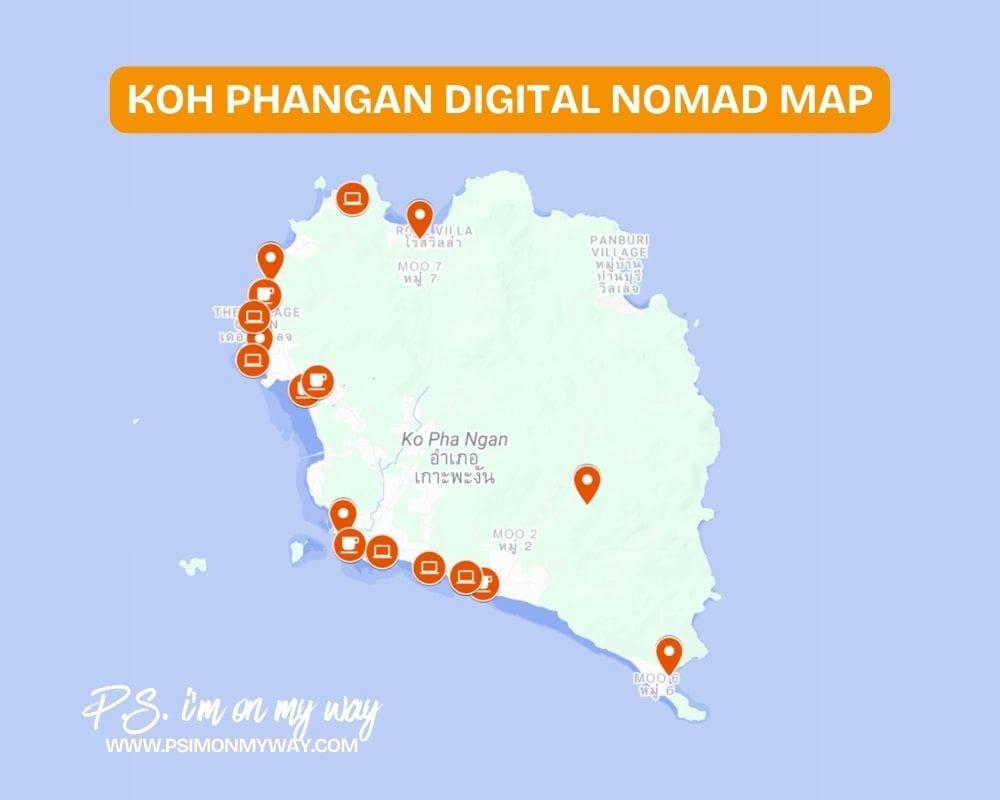
To get a feel for the island’s layout, I created this Koh Phangan digital nomad map. ? pins mark the best neighborhoods, ? icons highlight coworking spaces, and ☕ symbols show nomad‑friendly cafes.
✈️ You’ve read the guide, you’ve pictured the beaches. None of that matters unless you plan your next move. Book a consult call and turn ideas into action!
BOOK A 1-1 COACHING →
Yes. Thailand introduced the Destination Thailand Visa (DTV), valid for up to 5 years with multiple entries. Each entry allows a stay of up to 180 days, extendable by another 180 days. It is designed for remote workers, freelancers, and digital nomads earning income abroad.
Coworking spaces have average speeds between 300–500 Mbps download, with reliable connections suitable for video calls and large uploads. Many cafés also offer stable WiFi, though speeds vary.
Day passes cost around 300 THB ($8), weekly passes 1,500 THB ($42), and monthly memberships 4,500 THB ($125). Memberships include unlimited coffee, water, printing, and beach access for some.
Beachfront bungalows with coworking membership included start at 30,000 THB ($820) per month. Cheaper options inland or in shared houses can be found for $400–$600 monthly.
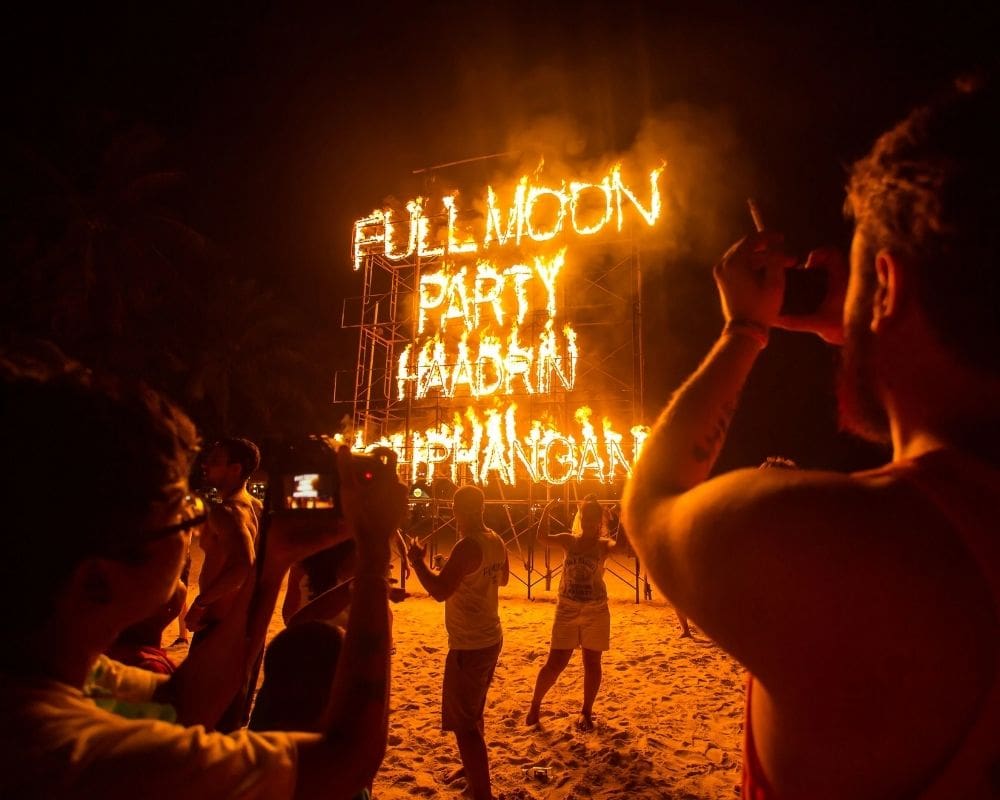
Yes, the island is generally safe. I never worried walking around at night in Thong Sala or Srithanu, and the community is welcoming. The biggest risks are scooter accidents and petty theft, so I always lock my bike and keep valuables secure. During Full Moon Party weeks, I stay cautious because crowds can get overwhelming, but overall the island has a relaxed vibe where I felt comfortable living and working.
 PHPTRAVELS v8